John F. Kennedy Jr.: Plane Crash Death, Wife, and Life Facts
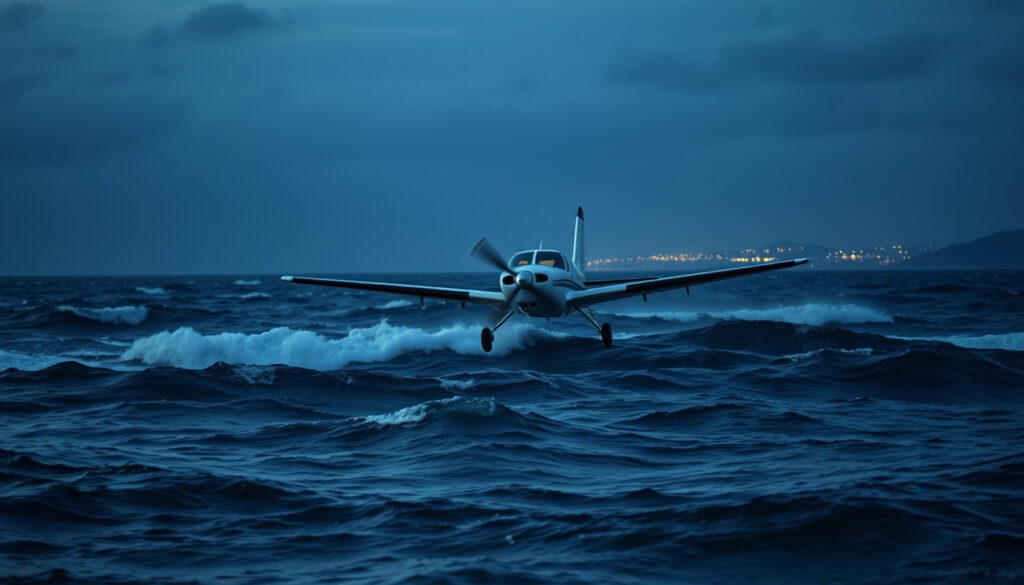
John F. Kennedy Jr. was 38 years old when he died, leaving behind his wife Carolyn Bessette Kennedy and a legacy that extended far beyond his famous name. On July 16, 1999, his Piper Saratoga crashed into the Atlantic Ocean near Martha’s Vineyard, killing all three aboard. What followed was one of the most closely examined aviation accidents in recent history, with investigators working to reconstruct the final moments of a flight that lasted less than two hours.
Born: November 25, 1960 · Died: July 16, 1999 · Age at Death: 38 · Wife: Carolyn Bessette Kennedy · Cause of Death: Plane crash
Quick snapshot
- Crash due to pilot spatial disorientation (AirSafe.com)
- Three fatalities aboard aircraft (NTSB Factual Report)
- Full NTSB investigation completed (Britannica)
- Exact final seconds of pilot awareness
- Whether JFK Jr. realized he was in distress
- No recorded personal last words
- April 5, 1999 — Instrument training began (NTSB)
- July 16, 1999, 20:38 — Departed Essex County Airport (Wikipedia)
- July 16, 1999, 21:41 — Crash confirmed (NTSB Factual Report)
- NTSB final report issued nearly a year later
- Case remains reference point for night VFR safety
- Family privately mourned at Hyannis Port
Six key data points anchor what we know about the crash, the aircraft, and the three people aboard the Piper Saratoga.
| Fact | Detail |
|---|---|
| Full Name | John Fitzgerald Kennedy Jr. |
| Birth Date | November 25, 1960 |
| Death Date | July 16, 1999 |
| Spouse | Carolyn Bessette Kennedy (m. 1996) |
| Occupation | Publisher, attorney |
| Plane Model | Piper PA-32R-301 Saratoga |
What happened to JFK junior and his wife?
On the evening of July 16, 1999, John F. Kennedy Jr. piloted a Piper Saratoga (registration N9253N) from Essex County Airport in New Jersey toward Martha’s Vineyard, where the family was expected to attend a wedding. He was accompanied by his wife, Carolyn Bessette Kennedy, and her sister, Lauren Bessette. The aircraft departed at 20:38 EDT under 14 CFR Part 91 as a personal flight, with no flight plan filed. The NTSB factual report documents the intended route as along the Connecticut coast, across Rhode Island Sound to Martha’s Vineyard Airport.
Location and recovery
Radar data reconstructed the final minutes of the flight. According to Britannica, the plane descended from 5,600 feet to 2,200 feet, briefly climbed to 2,600 feet, then executed a right turn before entering a rapid descent at over 4,700 feet per minute. The crash occurred at approximately 21:41 local time near Vineyard Haven, Massachusetts, when the aircraft struck the water and was destroyed on impact. All three occupants received fatal injuries. Recovery teams located the wreckage in the days following the accident.
What was the cause of the plane crash of John Kennedy Jr?
The National Transportation Safety Board investigation, docketed as NYC99MA178, determined the probable cause of the accident was the pilot’s failure to maintain control of the airplane during a descent over water at night, stemming from spatial disorientation. According to AirSafe.com, contributing factors included haze and the dark night conditions that obscured visual references over the water. The crash resulted in an uncontrolled descent and collision with water after the aircraft entered what investigators described as a graveyard spiral.
Pilot error factors
John F. Kennedy Jr. held only a private pilot certificate and was not instrument-rated. The NTSB factual report notes he had begun instrument training on April 5, 1999, but had not completed the rating. He was piloting under visual flight rules in conditions where the horizon was obscured by haze. While the aircraft was equipped with an autopilot, investigators determined it was not engaged at the time of the crash. Analysis of the aircraft systems confirmed the autopilot was available but inactive.
Official investigation findings
The NTSB final report, issued on July 6, 2000, found no evidence of mechanical failure. The wreckage examination was limited by impact damage and subsequent storms, but no pre-impact malfunction was identified. The pilot maintained radio silence throughout the flight, making no request for radar tracking or assistance. According to Britannica, both radios had incorrect frequencies programmed—one for Martha’s Vineyard ATIS and another for Essex County ATIS—which may have contributed to communication difficulties, though the NTSB did not officially comment on this factor’s role.
Night visual meteorological conditions over water without a visible horizon create conditions where even experienced pilots can lose orientation, a phenomenon aviation experts call spatial disorientation.
Who was on the plane with JFK Jr. when he crashed?
Two passengers accompanied John F. Kennedy Jr. on the fatal flight. His wife, Carolyn Bessette Kennedy, 33, had married the pilot in 1996 in a private ceremony that drew worldwide attention. She had worked in public relations for Christian Dior and later launched her own firm. Her sister, Lauren Bessette, 29, was working as an event planner and joined the couple for the trip to Martha’s Vineyard, where they were to attend the wedding of his cousin, Rory Kennedy.
Their backgrounds
Carolyn Bessette Kennedy grew up in Carnelian Bay, California, and later in New York City, where she became known for her understated elegance and style. Lauren Bessette, who had been studying for her MBA at the time of her death, was described by family as the more reserved of the two sisters. According to the NTSB report, all three aboard received fatal injuries upon impact with the water.
What were JFK Jr.’s last words before he died?
No recorded personal last words exist from John F. Kennedy Jr. before the crash. Britannica notes that Kennedy maintained radio silence throughout the entire flight, making no distress calls or communications beyond routine exchanges. The absence of a cockpit voice recorder on the Piper Saratoga meant there was no mechanism to capture any verbal exchange in the final moments.
Communication records
The aircraft did not file a flight plan, which limited air traffic control’s ability to track its progress. According to Wikipedia’s analysis of the incident, standard radar coverage extended over the route but the pilot did not request flight following or radar advisories. Contact with controllers was limited to standard position reports before the aircraft’s transponder signal was lost during the final rapid descent. What exactly Kennedy experienced or communicated in those closing seconds remains beyond the reach of official investigation.
Radar and tower contacts
Radar data from multiple sources allowed investigators to reconstruct the flight path, showing the aircraft’s altitude fluctuations and the right turn that preceded the final descent. Britannica reports the descent rate exceeded 4,700 feet per minute in the final phase, with an indicated airspeed of 160 knots during the terminal portion of flight. No distress indication was recorded, and tower personnel had no opportunity to intervene before radar contact was lost.
Did they ever find the bodies of JFK Jr. and Carolyn Bessette?
Recovery teams located the wreckage of the Piper Saratoga approximately three days after the crash, with the help of sonar equipment and Coast Guard vessels. The aircraft had come to rest on the ocean floor. The NTSB report on the Scribd archive details that divers worked to recover the remains of all three passengers, which were subsequently identified and released to family members for private burial.
Recovery efforts
The search for the aircraft involved the U.S. Coast Guard, state police, and private salvage vessels. Recovered wreckage included major aircraft components that allowed investigators to examine systems for any evidence of pre-impact failure. The NTSB 1999 Annual Report lists the crash among its notable investigations for the year, noting the resources deployed in the recovery and investigation efforts.
Autopsy details
While detailed toxicological results specific to Kennedy are not fully disclosed in available public documents, NTSB investigation protocols typically include standard toxicology screening. The investigation concluded with the identification of all three occupants, and the victims were buried following private memorial services held by the Kennedy and Bessette families.
The absence of a flight recorder on the Piper Saratoga meant investigators had no direct evidence of pilot awareness or decision-making in the final seconds—only radar data and wreckage analysis.
Key dates
The timeline traces Kennedy’s aviation history and the fatal flight in compressed sequence. For a deeper dive into royal aviation, you can read the Princess Stephanie of Monaco biography. Princess Stephanie of Monaco biography
| Date | Event |
|---|---|
| 1960 | Born in Washington, D.C. |
| 1963 | Father assassinated |
| 1996 | Married Carolyn Bessette |
| April 5, 1999 | Instrument training began (NTSB) |
| July 16, 1999, 20:38 | Departed Essex County Airport (Wikipedia) |
| July 16, 1999, 21:41 | Crash off Martha’s Vineyard (NTSB Factual Report) |
| July 6, 2000 | NTSB final report issued (Britannica) |
What we know and what remains uncertain
Investigators reached clear conclusions on several critical points, while other questions remain beyond definitive answer.
Confirmed facts
- Crash due to spatial disorientation in night VFR flight
- Three fatalities: JFK Jr., Carolyn Bessette Kennedy, Lauren Bessette
- Pilot held private certificate, not instrument-rated
- No evidence of mechanical failure
- NTSB investigation formally documented under NYC99MA178
- Flight departed with no filed flight plan
Unresolved questions
- Exact pilot awareness in final seconds
- Whether distress could have been recognized or communicated
- Why radios were set to incorrect frequencies
- Whether instrument training status created false confidence
- Details of family response beyond private memorial services
What authorities concluded
The probable cause(s) of this accident to be: VFR flight by the pilot into instrument meteorological conditions (IMC), and his loss of aircraft control due to spatial disorientation.
— National Transportation Safety Board (Investigation Authority)
He got disoriented in the absence of visual cues, and he erroneously flew a perfectly good airplane into the invisibly dark Atlantic Ocean.
— TCW Insights (Aviation Analysis)
Spatial disorientation in VFR pilots over water at night is not unique to this case—a category of accidents where pilots lose the horizon in dark conditions has long challenged aviation safety experts.
The lasting questions
The NTSB investigation provided answers to the central question—why the Piper Saratoga descended into the ocean without apparent evasive action—but the human dimensions of the tragedy resist simple resolution. Spatial disorientation, a hazard well documented in aviation medicine, claimed three lives in conditions that remain common for private pilots flying at night over water. The investigation closed with formal findings and recommendations, but for the families and the public, the emotional weight of the loss persists.
For pilots considering night VFR flights over water, the lesson is cautionary: even brief instrument training did not equip Kennedy to recognize or recover from disorientation, and the absence of a visible horizon created conditions where control could be lost within seconds. FAA safety guidance emphasizes that instrument rating training provides the skills to handle exactly these scenarios, underscoring the gap between partial training and full certification.
Related reading: Ryan Reynolds Net Worth · Benny Blanco Net Worth
The NTSB cited spatial disorientation during the night flight as the cause, while his biography wife death facts explores John F. Kennedy Jr.’s full life alongside wife Carolyn and the tragedy.
Frequently asked questions
How old was John F. Kennedy Jr. at the time of his death?
He was 38 years old. Born November 25, 1960, he died July 16, 1999.
What type of plane was John F. Kennedy Jr. flying?
A Piper PA-32R-301 Saratoga, registration N9253N, a single-engine aircraft with 300 horsepower rated power.
Where was the plane crash wreckage found?
The wreckage rested on the ocean floor near Vineyard Haven, Massachusetts, approximately three days after the crash.
Was John F. Kennedy Jr. an experienced pilot?
He held a private pilot certificate but was not instrument-rated. He had begun instrument training on April 5, 1999, but had not completed the rating before the crash.
What magazine did John F. Kennedy Jr. publish?
He was the founder and publisher of George magazine, a political publication launched in 1991.
When did John F. Kennedy Jr. marry Carolyn Bessette?
They were married in a private ceremony in 1996 on Cumberland Island, Georgia.
Did John F. Kennedy Jr. have children?
No. He and Carolyn Bessette Kennedy had no children at the time of their deaths.
More related posts
 Ear Wax Removal Hamilton: Costs, Clinics & Alternatives
 Best Rotkohl with Apples Near Me: Authentic German Recipe
 Air NZ Cheap Flights: Deals, Tips & Booking Hacks
 Stranded on Honeymoon Island: Couples Update & Where Are They Now
 Auckland to Palmerston North: Flights, Train, Bus, Drive Times
 Under the Bridge Cast: Actors, Characters & Real Story
 Nike Women’s Shoes NZ – Where to Buy & Best Models
 For I Know the Plans I Have for You – Biblical Context Explained