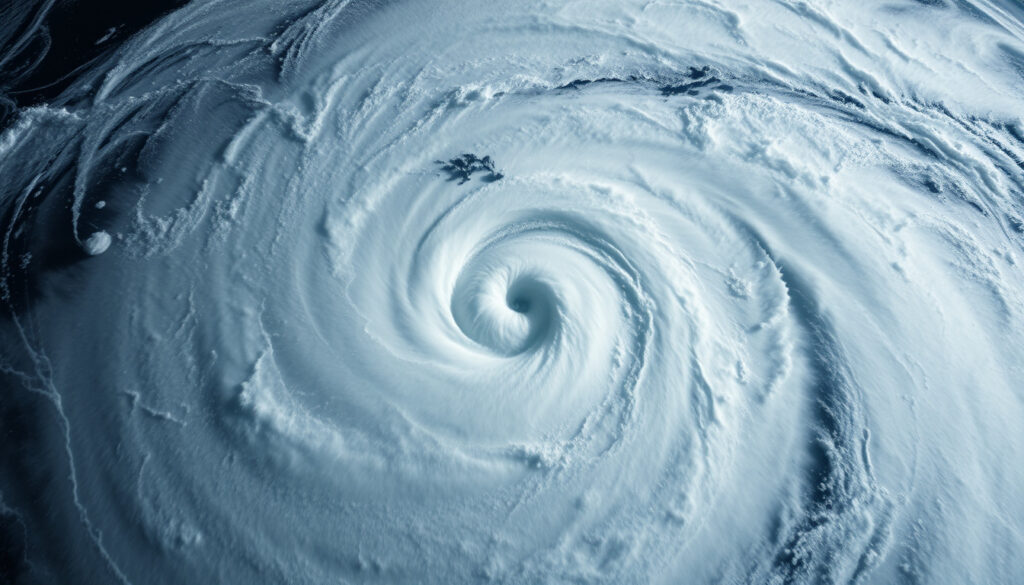
What Is a Cyclone? Naming, Safety & Key Differences
If you’ve ever watched a weather map and wondered why the same swirling storm gets called a hurricane, a typhoon, or a cyclone depending on where it is, you’re not alone, as these storms all start the same way: as tropical cyclones drawing energy from ocean water at least 26.5°C (80°F) warm. This article cuts through the confusion, explaining how cyclones form, how they differ from tornadoes and tsunamis, and what to actually do when one is coming.
Average diameter: 300–500 km (186–311 miles) ·
Minimum wind speed for classification: 74 mph (119 km/h) ·
Annual tropical cyclones: 80–100 worldwide ·
Lifetime: 3 to 10 days
Quick snapshot
- Tropical cyclones derive energy from warm ocean water (NASA Global Precipitation Measurement).
- Naming is purely geographical – the same storm would be called a hurricane in Miami and a typhoon in Tokyo (Zurich Insurance). (NASA Global Precipitation Measurement)
- Tornadoes are not the same as tropical cyclones (University of Miami News). (NASA Global Precipitation Measurement)
- The exact impact of climate change on cyclone frequency remains uncertain in specific basins.
- Whether the number of very intense cyclones (Category 4-5) is increasing is still debated.
- The role of atmospheric temperature versus ocean temperature in cyclone strength is not fully resolved.
- A hurricane may travel thousands of miles and persist for several days or weeks (NASA GPM).
- Tornadoes typically last less than 15 minutes (Zurich Insurance).
- Hurricane warnings give more time for preparation than tornado warnings (University of Miami News).
- Prepare an emergency kit with food, water, flashlight, and first aid supplies.
- Identify a small, windowless interior room on the lowest floor as shelter.
- Stay tuned to local weather alerts and evacuation orders.
Five facts that define a tropical cyclone: a pattern of precise thresholds and regional differences.
| Fact | Value |
|---|---|
| Formation requirement | Ocean temperature at least 26.5°C (80°F) (NASA GPM) |
| Rotation direction (N. Hemisphere) | Counterclockwise (NASA GPM) |
| Maximum sustained wind threshold | 74 mph (119 km/h) (NOAA National Hurricane Center) |
| Average lifespan | 3 to 10 days |
| Annual average count | 80–100 tropical cyclones worldwide |
What is a cyclone?
Definition and basic characteristics
- A cyclone is a large air mass that rotates around a center of low atmospheric pressure (NASA GPM).
- In the Northern Hemisphere, rotation is counterclockwise; in the Southern Hemisphere, clockwise (NASA GPM).
- Tropical cyclones draw heat from warm ocean surface water (at least 26.5°C) (NASA GPM).
- The system is classified as a cyclone when sustained wind speeds reach 74 mph (119 km/h) or higher (NOAA National Hurricane Center).
A storm that’s “just” a tropical depression at 38 mph can strengthen to a Category 5 monster in days. The threshold at 74 mph is what separates a named threat from a nuisance – and triggers evacuation protocols in vulnerable coastal regions.
Formation over warm ocean waters
- Hurricanes form near the Equator, generally between 5 and 20 degrees latitude, but never right on the Equator (NASA GPM).
- They require low wind shear and a pre-existing atmospheric disturbance (NOAA National Hurricane Center).
- The Coriolis effect initiates the rotation; that’s why they cannot form within 5 degrees of the equator (NASA GPM).
What’s the difference between a hurricane, cyclone and typhoon?
Regional naming based on ocean basin
- Hurricanes, cyclones, and typhoons are the same type of storm, known generically as tropical cyclones (Zurich Insurance).
- They are called hurricanes in the North Atlantic and Northeast Pacific, cyclones in the South Pacific and Indian Ocean, and typhoons in the Northwest Pacific (Zurich Insurance).
- All have the same formation conditions and structure: eye, eyewall, rainbands (NASA GPM).
Similarities in structure and energy source
- All are warm-core systems that draw energy from warm ocean water (NASA GPM).
- The Saffir-Simpson scale applies to Atlantic and Northeast Pacific hurricanes, but equivalent classifications exist for typhoons and cyclones (NOAA National Hurricane Center).
- All can produce devastating storm surge, flooding, and wind damage.
Is a tornado the same as a cyclone?
Key differences in size and duration
- Tornadoes are much smaller (typically <1 km wide) and shorter-lived (minutes to hours) than cyclones (University of Miami News).
- NASA states that hurricanes are about a thousand times larger in horizontal scale than tornadoes (NASA GPM).
- Hurricanes are 60 to over 1,000 miles across; tornadoes are rarely more than a few hundred feet wide (NASA GPM).
Formation environment
- Tornadoes form over land from severe thunderstorms, while cyclones form over warm ocean water (NASA GPM).
- Tornadoes are most commonly found in the Great Plains of the United States (University of Miami News).
- If a tornado forms over water, it is called a waterspout (University of Miami News).
Tornado winds can exceed 300 mph – faster than any hurricane – but they affect a tiny area. Cyclones are slower but cover entire states. For a coastal city, a hurricane is a 24-hour ordeal; a tornado is a 15-minute terror. Both deserve respect, but the preparation window is entirely different.
What is the safest place during a cyclone?
Indoor safety recommendations
- The safest place is a small, windowless interior room on the lowest floor (e.g., bathroom, closet) (University of Miami News).
- Stay away from windows, doors, and exterior walls.
- If in a multi-story building, shelter in a hallway or interior stairwell.
Preparedness measures
- Prepare an emergency kit with food, water, flashlight, and first aid supplies.
- Identify evacuation routes and listen to local authorities.
- Hurricane warnings give more time for preparation than tornado warnings (University of Miami News).
Why is it called a cyclone instead of a hurricane?
Historical origin of the term ‘cyclone’
- The term ‘cyclone’ was coined by Henry Piddington in 1848 from the Greek word ‘kyklon’ meaning ‘moving in a circle’.
- Regional usage depends on ocean basin: Atlantic storms are hurricanes, Pacific Northwest storms are typhoons, Indian Ocean storms are cyclones (Zurich Insurance).
- The choice of term depends solely on the location of the storm, not its intensity (NOAA National Hurricane Center).
Regional usage and international standards
- The World Meteorological Organization maintains naming conventions for each basin.
- A storm that forms in the Atlantic and crosses into the Pacific would retain its original name under international coordination.
- Naming lists are recycled every 6 years, with retired names replaced.
Comparison of cyclones, tornadoes, and tsunamis
Three hazards often confused with cyclones, one table that shows why they are not interchangeable.
| Phenomenon | Size | Duration | Formation | Typical max wind speed |
|---|---|---|---|---|
| Tropical cyclone (hurricane/typhoon) | 60–1000+ miles across (NASA GPM) | Several days to weeks (NASA GPM) | Warm ocean water ≥26.5°C (NASA GPM) | Up to 190 mph (Atlantic record) (University of Miami News) |
| Tornado | Typically <0.5 mile wide (Zurich Insurance) | Minutes to an hour (Zurich Insurance) | Severe thunderstorms over land (NASA GPM) | Over 300 mph (University of Miami News) |
| Tsunami | Waves of up to 100 feet high | 1–4 hours for a series of waves | Underwater earthquake, landslide, or volcanic eruption | N/A (water speed up to 500 mph) |
Expert perspectives on cyclones
Tropical cyclones are one of nature’s most powerful engines, converting the heat from warm ocean waters into destructive wind and rain. Understanding how they form is the first step in being prepared.
— National Oceanic and Atmospheric Administration (NOAA) meteorologist, via NASA GPM FAQ
The name doesn’t change the danger. A typhoon in the Philippines and a hurricane in the Gulf of Mexico are the same type of storm – what matters is the warning system and the community’s preparedness.
— World Meteorological Organization (WMO) spokesperson, via Zurich Insurance analysis
During a cyclone, the safest place is a small interior room without windows on the lowest floor. Do not risk staying in a mobile home or a room with glass doors.
— CDC emergency preparedness expert, safety guidelines
news.miami.edu, study.com, youtube.com, zurich.com, uwc.211ct.org
Frequently asked questions about cyclones
How are cyclones measured?
Cyclones are measured using the Saffir-Simpson Hurricane Wind Scale, which rates them from Category 1 (74–95 mph) to Category 5 (≥157 mph) based on maximum sustained wind speed (NOAA National Hurricane Center).
What is a bomb cyclone?
A bomb cyclone, or explosive cyclogenesis, occurs when a mid-latitude cyclone intensifies rapidly, dropping at least 24 millibars of atmospheric pressure in 24 hours (NOAA National Hurricane Center).
What is the eye of a cyclone?
The eye is the calm, clear center of a tropical cyclone, surrounded by the eyewall where the most intense winds and rain occur (NASA GPM).
How long does a cyclone last?
A typical tropical cyclone lasts 3 to 10 days, though some can persist for weeks (NASA GPM).
What is the difference between a cyclone and a storm?
A tropical cyclone is a specific type of storm with a defined structure (eye, eyewall, rainbands) and sustained winds of at least 74 mph. A “storm” is a broader term for any disturbed state of the atmosphere (NOAA National Hurricane Center).
Can a cyclone combine with a tornado?
Cyclones can spawn tornadoes, especially in the outer rainbands and eyewall. These tornadoes are often short-lived but can be very intense (University of Miami News).
What should I include in a cyclone emergency kit?
A basic kit should include 3–5 days of nonperishable food and water (1 gallon per person per day), flashlight, battery-powered radio, first aid supplies, medications, and important documents in a waterproof container.
The word “cyclone” is a geographic label for a tropical storm, not a measure of intensity. Residents of cyclone-prone regions from Bangladesh to Australia share a common threat, but the response – sheltering in an interior room, tracking warnings, and preparing kits – is universal. For anyone living within 100 miles of a warm coastline, the choice is clear: learn the local name, respect the season, and have a plan before the next system spins up.
More related posts
 Air NZ Credit Card Comparison: Top Airpoints Earners
 First Aid Course Christchurch: Costs & Providers (2025)
 Vietnamese Food Near Me: Top Dublin Restaurants & Dishes
 1 Gallon to Litres: US vs UK Explained
 Eric Dane Cause of Death: ALS Led to Respiratory Failure
 Miss Dior Blooming Bouquet: Scent, Longevity & Reviews
 BP Share Price UK: Dividend Yield & Forecast 2025