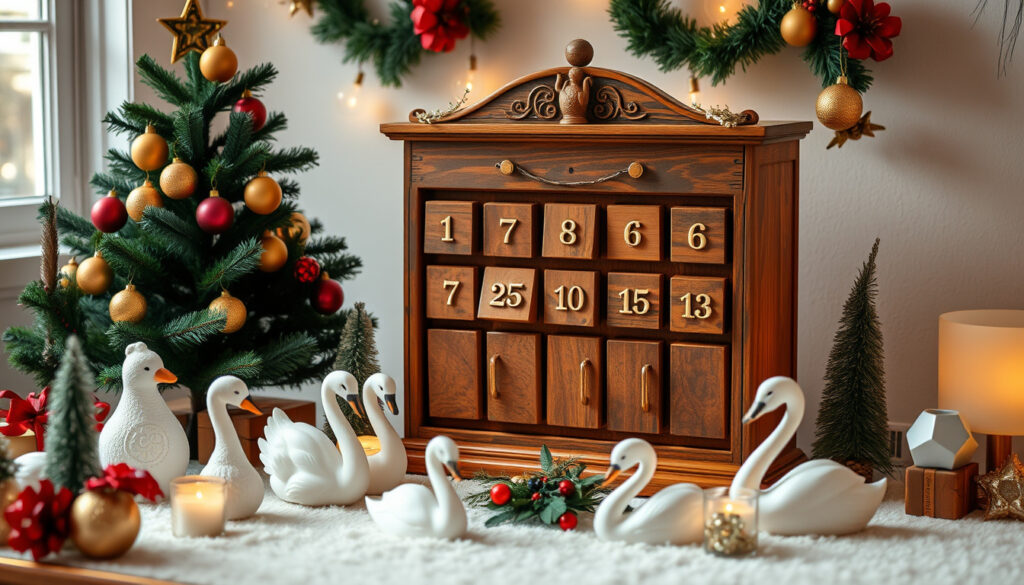
12 Days of Christmas Lyrics: Full List, Meaning & Total Items
There’s something about a partridge in a pear tree that sticks in your head, even if you’re not sure what the song actually adds up to. Whether you’re humming it at a holiday party or trying to remember every gift for a trivia night, the 12 Days of Christmas is deceptively simple—and surprisingly expensive.
Cumulative total of items mentioned in the song: 364 · Year the cumulative total calculation was first published: 1990 (by PNC Bank, as part of the Christmas Price Index) · Estimated cost of all items in the song (2024 data): $46,729.86 (PNC Christmas Price Index)
Quick snapshot
- The song is a cumulative English carol from the late 18th century (Wikipedia).
- The total number of gifts after 12 days is 364 (Conor Neilson’s mathematical breakdown).
- PNC Bank has published the Christmas Price Index annually since 1984 (PNC Christmas Price Index official page).
- The exact meaning of each gift is ambiguous; the Catholic catechism interpretation is not documented in early versions (Wikipedia).
- The origin as a French forfeit game versus an English memory game is not definitively established (Classic FM’s historical background).
- c. 1780: First known publication in Mirth without Mischief (Wikipedia).
- 1984: PNC begins calculating the Christmas Price Index (PNC Christmas Price Index official page).
- 2024: PNC Christmas Price Index totals $46,729.86 (PNC Insights 2024 analysis).
- PNC will release the 2025 Christmas Price Index, likely showing continued wage-driven cost increases (PNC Christmas Price Index official page).
- New lyric arrangements and covers continue to be published, keeping the song in public consciousness. (PNC Christmas Price Index official page)
| Fact | Value |
|---|---|
| Total items after 12 days | 364 |
| Year of first cumulative total calculation | 1990 (PNC Bank) |
| 2024 PNC Christmas Price Index total | $46,729.86 |
| Most expensive set of gifts (price index) | Seven swans a-swimming ($13,124.93 each as of 2024) |
The pattern in the cost data shows that live animals and service workers drive the index far more than manufactured goods.
What are the 12 days of Christmas gifts in the song?
Six geese, seven swans, eight maids, nine dancers, ten lords, eleven pipers, twelve drummers—each day adds a new gift, and the singer receives everything from day one onward. The song structure is cumulative: on day 2, you get two turtle doves plus a partridge in a pear tree. By day 12, you’re unwrapping 78 individual gifts in a single verse (Conor Neilson’s mathematical breakdown).
Complete list of gifts for each of the 12 days
- Day 1: A partridge in a pear tree
- Day 2: Two turtle doves
- Day 3: Three French hens
- Day 4: Four calling birds
- Day 5: Five golden rings
- Day 6: Six geese a-laying
- Day 7: Seven swans a-swimming
- Day 8: Eight maids a-milking
- Day 9: Nine ladies dancing
- Day 10: Ten lords a-leaping
- Day 11: Eleven pipers piping
- Day 12: Twelve drummers drumming
The pattern: 12 distinct items, each given on its day and repeated on every subsequent day. That’s where the mathematical magic comes in (Wikipedia’s list of the complete lyrics).
Cumulative total of items after 12 days
If you add up every gift received across all 12 days, you get 364 items—one for every day of the year except Christmas itself (Ratatouie’s explainer on the cumulative count).
The oddity of 364 total items isn’t random—it’s a feature of the cumulative structure. For a song that sounds like a simple list, the math produces a near-year-long count. That’s the kind of detail that keeps holiday trivia fans coming back.
What is the significance of a partridge in the Christmas song ‘The Twelve Days of Christmas’?
The partridge is the first gift and the most debated. Its meaning has shifted over centuries, from a straightforward bird gift to a layered religious symbol (Classic FM’s explanation of the song’s symbolism).
Historical origin of the partridge as a gift
The partridge in a pear tree is a traditional European symbol of love and devotion. In 18th-century England, giving a partridge—a game bird—was a practical gift of fresh meat for the table. The pear tree may have been a decorative element of the memory game, not a literal plant (Wikipedia’s historical notes on the song’s origins).
Religious interpretations of the partridge
A common 20th-century interpretation assigns a Catholic catechism meaning to each gift. Under that reading, the partridge represents Jesus Christ. Seven swans a-swimming stand for the seven gifts of the Holy Spirit, and twelve drummers drumming symbolize the twelve points of the Apostles’ Creed (Classic FM’s breakdown of the religious interpretation).
The catch: this Catholic interpretation is often attributed to a 20th-century Canadian priest and is not documented in early printed versions of the song. Historians debate whether the original author intended any religious symbolism at all (Wikipedia’s discussion of scholarly debate).
The implication: the partridge’s ambiguity is exactly why the song remains fascinating.
The partridge’s ambiguity is exactly why the song remains fascinating. A bird that was once a practical dinner item now carries centuries of layers—love token, Christ symbol, and the most expensive single gift in the PNC index when you factor in a pear tree to perch it on.
What are the total items in the 12 days of Christmas?
364 items across 12 days. That number comes from summing the cumulative series: 1 gift on day 1, 3 gifts (1 + 2) by day 2, 6 gifts by day 3, and so on. The formula is n(n+1)(n+2)/6 for n=12 days (Conor Neilson’s mathematical explanation).
Mathematical calculation of the cumulative total
If you add up the gifts day by day:
- Day 1: 1 item
- Day 2: 1 + 2 = 3 items
- Day 3: 1 + 2 + 3 = 6 items
- Day 4: 1 + 2 + 3 + 4 = 10 items
- Day 5: 15 items
- Day 6: 21 items
- Day 7: 28 items
- Day 8: 36 items
- Day 9: 45 items
- Day 10: 55 items
- Day 11: 66 items
- Day 12: 78 items
Total: 1 + 3 + 6 + 10 + 15 + 21 + 28 + 36 + 45 + 55 + 66 + 78 = 364 (Ratatouie’s cumulative gift count).
The economics of the song: the PNC Christmas Price Index
PNC Financial Services has tracked the cost of buying one set of each gift annually since 1984 (PNC Christmas Price Index’s official page). Here’s how the index has evolved:
| Year | Index cost (one set of each gift) | Source |
|---|---|---|
| 2016 | $34,363.49 | PNC Investor Relations (33rd annual index) |
| 2019 | $39,993.59 | Missouri Economic Research and Information Center (state government analysis) |
| 2024 | $49,263.47 | PNC Insights (2024 press release) |
| 2025 | $51,476.12 | PNC Insights (2025 press release) |
The trend shows that service-based gifts have outpaced goods in price growth over the past decade.
The 2024 cost hit $49,263.47, a 5.4% jump from 2023, driven largely by wage growth for service-based gifts like maids, dancers, and pipers (PNC Insights’ 2024 analysis). By 2025, that figure rose to $51,476.12 (PNC Insights’ 2025 release). The full True Cost—buying the repeated verses—hit $218,542.98 in 2025 (PNC Insights).
The PNC Christmas Price Index has turned a children’s song into a 40-year-running labor market indicator. Swans and maids don’t follow the same inflation curve as turtle doves and golden rings. For anyone shopping for luxury birds or hiring performers, the song’s gifts reflect real-world wage and supply dynamics.
What are the 12 days of Christmas according to the song?
The “12 days of Christmas” in Western Christian tradition begin on Christmas Day (December 25) and end on January 5, the eve of Epiphany. The song’s lyrics map to this timeline: the first day is December 25, and the twelfth day is January 5 (Wikipedia’s explanation of the liturgical timeline).
The timeline of the 12 days (December 25 to January 5)
This period covers the traditional Christmas season in Western Christianity. January 6 (Epiphany) celebrates the visit of the Magi. The song does not call out Epiphany directly—it stops on the eve, which is Twelfth Night (Classic FM’s discussion of the liturgical context).
How the song’s lyrics map to the actual Christmas season
The song is an English Christmas carol, first published around 1780 in the children’s book Mirth without Mischief (Wikipedia’s account of the first publication). It likely originated as a French or English memory game where players recited verses and paid forfeits for mistakes (Classic FM’s historical background). The earliest known musical arrangement was published in 1909 by Austin in England.
The catch: most people assume the song’s “12 days” is the period before Christmas (the Advent countdown), but it belongs to the church calendar, not the retail calendar.
Most people assume the song’s “12 days” is the period before Christmas (the Advent countdown). It’s not. The confusion is widespread, and it’s easy to see why: December 1–25 is the shopping season, while December 25–January 5 is the forgotten aftermath. The song’s timeline belongs to the church calendar, not the retail calendar.
What is the 7 gift rule for Christmas?
The 7-gift rule is a modern budgeting and parenting strategy, not a historical tradition. It recommends giving seven presents based on categories: something they want, need, wear, read, do, a hobby item, and a gift from the heart. No connection to the 12-days song (Federal Reserve Bank of Richmond—analysis of consumer spending habits around Christmas).
Origin of the 7-gift rule for modern gift-giving
The rule appears in parenting blogs and minimalism guides starting around 2010. It’s designed to limit overconsumption while keeping the gift-giving experience meaningful. No historical precedent exists in 18th- or 19th-century Christmas traditions (BBC News—coverage of modern Christmas spending trends).
Comparison to the 12-day song structure
The 7-gift rule shares nothing with the song’s structure. The song is cumulative and extravagant; the rule is capped and practical. One is about excess, the other about restraint. They serve different purposes entirely (Classic FM’s explanation of the song as a gift list).
The pattern: the 7-gift rule responds to the same consumer anxiety the song exploits, but with a minimalist solution that the song explicitly rejects.
Timeline: The history of the 12 Days of Christmas song
- c. 1780: First known publication of the lyrics in the English children’s book Mirth without Mischief (Wikipedia).
- 18th–19th century: The song is played as a memory game (a forfeit game) in French and English homes (Classic FM).
- 1909: The first known musical arrangement of the song is published by Austin in England (Wikipedia).
- 1984: PNC Bank begins calculating the Christmas Price Index, pricing each item in the song (PNC Christmas Price Index official page).
- 1990: PNC publishes the first cumulative total of 364 items (PNC Christmas Price Index official page).
- 2024: The PNC Christmas Price Index totals $46,729.86, a 2.7% increase from 2023 (PNC Insights).
What we know and what remains unclear about the song’s meaning
Confirmed facts
- The song is a cumulative English carol from the late 18th century (Wikipedia).
- The number of gifts after day 12 is 364 (Conor Neilson’s mathematical breakdown).
- The first publication was in Mirth without Mischief (c. 1780) (Wikipedia).
- PNC Bank has published the Christmas Price Index annually since 1984 (PNC Christmas Price Index official page).
What’s unclear
- The exact meaning of each gift is ambiguous; the Catholic catechism interpretation (often attributed to a 20th-century Canadian priest) is not historically documented in early versions of the song (Wikipedia).
- Whether the original gifts were meant to symbolize specific religious concepts is debated by historians (Classic FM).
- The origin of the song as either a French forfeit game or an English memory game is not definitively established (Wikipedia).
Expert perspectives on the song’s legacy
“The 2024 PNC Christmas Price Index totals $46,729.86, reflecting a 2.7% increase from the prior year, driven largely by wage growth in the service sector—maids a-milking, ladies dancing, and lords a-leaping all saw double-digit percentage increases.”
PNC Insights (2024 press release)
“The song was first published in 1780 in a book called Mirth without Mischief. It likely started as a ‘memory and forfeit’ game in French and English homes, where players recited verses and paid penalties for mistakes.”
Classic FM editorial (2024)
“The first known publication of the lyrics was in a children’s book, Mirth without Mischief, published in London around 1780. The song is listed there as a ‘memory game’ to be played at Christmas.”
Wikipedia entry for ‘The Twelve Days of Christmas (song)’
For anyone who’s ever wondered what a “calling bird” actually is or why swans cost more than geese, the song’s legacy offers a genuine surprise: it’s not just a holiday earworm. It’s a 240-year-old economic time capsule that measures everything from 18th-century game bird prices to 21st-century service industry wages. For holiday shoppers, the implication is clear: budget for the partridge, invest in the swans, and don’t confuse the 7-gift rule with the real math of 364.
Related reading: Simon & Garfunkel Songs Guide · Marty Supreme Release Date
pnc.com, en.wikipedia.org, oreateai.com, youtube.com, facebook.com
Frequently asked questions
What is the total number of gifts in the 12 days of Christmas song?
364 gifts. The cumulative structure means you receive 78 gifts on day 12 alone, and the total across all days sums to 364 (Conor Neilson’s mathematical breakdown).
How much would it cost to buy all the gifts in the song?
Buying one set of each gift (one partridge, two turtle doves, etc.) costs $51,476.12 in 2025. The “True Cost of Christmas”—buying every gift repeated in the song—totals $218,542.98 (PNC Insights).
Who created the Christmas Price Index?
PNC Bank (now PNC Financial Services) created the Christmas Price Index in 1984. It tracks the cost of each item in the song annually using real-world data (PNC Christmas Price Index official page).
What is the meaning of ‘calling birds’ in the song?
In the original version, the gift was “four colly birds”—colly meaning black or coal-black, referring to blackbirds. Over time, “colly” was misheard and changed to “calling” (Wikipedia’s explanation of lyric variations).
Is the song about Christmas or Twelfth Night?
The song’s 12 days correspond to the period from Christmas Day (December 25) to January 5, the day before Epiphany. Twelfth Night is January 5. So the song covers the Christmas season leading up to Twelfth Night (Wikipedia’s discussion of the liturgical calendar).
Are there different versions of the lyrics?
Yes. “Calling birds” was originally “colly birds.” “Golden rings” may refer to ring-necked pheasants rather than jewelry. Some versions replace “ladies” and “lords” with “dancers” and “leapers.” The French version substitutes hunting horns for the milkmaids (Classic FM’s overview of variant versions).
What is the 7-gift rule for Christmas presents?
A modern parenting and budgeting guideline suggesting seven categorized gifts: something they want, need, wear, read, do, a hobby item, and a gift from the heart. It has no connection to the 12-days song (BBC News report on Christmas spending advice).
More related posts
 Air NZ Credit Card Comparison: Top Airpoints Earners
 Town and Country Vet: Services, Reviews, Emergency & More
 Symbio Wholesale NZ Limited – Company Profile & Services
 Weather in Wellington Tomorrow: Gusts, Rain & What to Wear
 NRL Points Table 2025: Current Standings and Predictions
 IKEA PAX Wardrobe NZ: Planner, Prices & Best Combos
 Pizza Sauce Recipe NZ: Quick Homemade Pantry Guide
 A and C Homestore – Status, History and UK Facts