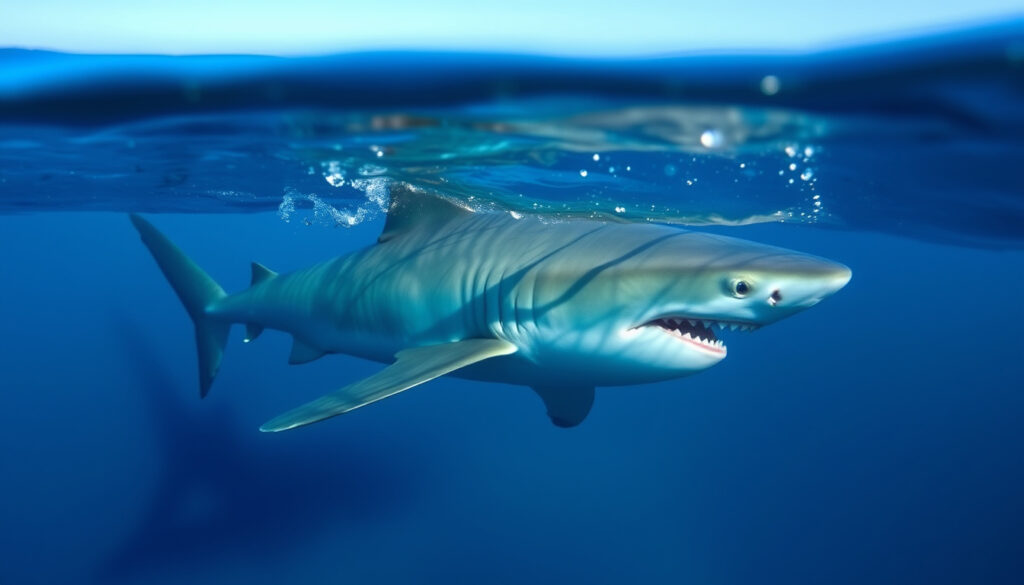
Great White Shark Attacks: Facts & Survival Tips
Few ocean creatures spark as much fear as the great white shark, yet the reality of attacks is far more nuanced than Hollywood suggests. According to the Florida Museum of Natural History (shark attack research authority), the International Shark Attack File recorded 65 unprovoked shark bites worldwide in 2025 — close to the five-year average — in what follows we separate fact from fiction with clear risk assessment and practical safety guidance.
Unprovoked great white attacks (ISAF): 292 ·
Unprovoked shark attacks (2025): 65 ·
Fatal shark attacks (2025): 12
Quick snapshot
- Great white sharks have attacked humans in unprovoked incidents — 292 unprovoked incidents recorded by the Florida Museum (species attack database).
- Most attacks are non-fatal — a 2019 review in PMC (peer-reviewed medical journal) notes that only about 6 of 75–100 annual unprovoked attacks result in death.
- Orcas are known to prey on great white sharks — documented by The Guardian (environmental news outlet) in recent studies.
- Whether certain sounds or smells reliably deter sharks — no definitive study exists, according to NOAA Fisheries (marine management agency).
- Whether sharks can actually ‘smell fear’ or just detect stress chemicals — currently unproven. (NOAA Fisheries (marine management agency))
- The exact number of total great white attacks due to reporting gaps — the ISAF (global attack database) acknowledges incomplete historical data. (NOAA Fisheries (marine management agency))
- 1916: New Jersey shark attacks — 4 deaths, inspired Jaws (ISAF historical records).
- 2023: 10 fatal shark attacks globally — highest in a decade (The Guardian). (ISAF historical records)
- May 2026: Fatal great white attack near Perth, Australia (The Guardian). (ISAF historical records)
- Continued research into shark behavior and deterrents by institutions like Florida Museum.
- Improved safety protocols and public awareness campaigns.
- Ongoing tracking of attack patterns to inform coastal management.
The snapshot above distills the core facts, uncertainties, historical signals, and forward-looking developments around great white shark attacks.
Below is a quick-reference table of key great white shark facts and figures drawn from authoritative sources.
| Attribute | Value |
|---|---|
| Scientific name | Carcharodon carcharias (Florida Museum species page) |
| Average adult length | 4–6 meters (Florida Museum) |
| Average adult weight | 1,100–2,000 kg (Florida Museum) |
| Number of fatal attacks since 1900 | Around 60 (ISAF species table) |
| Most famous attack | 1916 New Jersey attacks (ISAF) |
| Most recent fatal attack (2026) | Perth, Australia (May 2026) (The Guardian) |
| ISAF archive size | Over 3,200 investigations since mid-1500s (SERC Carleton (educational resource)) |
What Was the Most Famous Great White Shark Attack?
When people think of great white shark attacks, one event stands out above all others — the 1916 New Jersey shore attacks that killed four people and inspired the novel Jaws.
The 1916 New Jersey shore attacks
- Over 12 days in July 1916, a series of shark attacks occurred along the New Jersey coast, resulting in four deaths and one injury (ISAF historical records).
- The attacks were widely reported and sparked a national panic, fundamentally changing the public perception of sharks (Florida Museum).
The 1975 Jaws inspiration
- Peter Benchley’s novel Jaws and the subsequent film were directly inspired by the 1916 attacks, cementing the great white as a cultural icon of terror (Florida Museum).
- The film’s release led to a surge in shark fishing and a lasting fear of sharks (The Guardian).
Recent high-profile attacks
- In 2003, surfer Bethany Hamilton lost her arm to a tiger shark attack off Hawaii — a story of survival that inspired many (ISAF).
- In May 2026, a fatal great white attack occurred near Perth, Australia, drawing global attention (The Guardian).
The pattern: The 1916 attacks, though an outlier, have shaped the narrative around great white sharks for over a century, making it difficult to separate real risk from cultural fear.
Has a Great White Shark Ever Attacked a Human?
Yes, great white sharks have attacked humans. The International Shark Attack File has documented 292 unprovoked and 59 provoked incidents involving great whites, as of the latest data.
Documented great white attacks on humans
- The ISAF species table lists Carcharodon carcharias as the species most implicated in attacks, with 351 total incidents (Florida Museum species table).
- These range from minor bites to fatal encounters, but the majority are non-fatal.
Unprovoked vs. provoked attacks
- Unprovoked attacks occur when a shark bites a human without any human provocation. Of the 351 great white incidents, 292 are unprovoked (Florida Museum).
- Provoked attacks happen when a human initiates interaction (e.g., touching, feeding). The remaining 59 incidents fall into this category.
Attack statistics by region
- The United States, Australia, and South Africa have the highest numbers of great white attacks (ISAF yearly summary).
- In 2025, the US recorded the most unprovoked bites nationally, followed by Australia (The Guardian).
What this means: Great whites do attack humans, but the risk is geographically concentrated and the vast majority of encounters do not end in death.
How Many People Have Died from Great White Sharks?
Around 60 fatal great white shark attacks have been recorded since 1900, according to the International Shark Attack File. The annual number is low — typically less than one death per year from great whites.
Fatal great white attacks per year
- The ISAF data shows that great white sharks account for about half of all shark-related fatalities, but the absolute number is small: an average of 0.5–1 fatal attack per year (Florida Museum).
- In 2025, there were 12 confirmed shark fatalities globally, but only a fraction were attributed to great whites (The Guardian).
Comparison with other shark species
- Great whites are the most frequently implicated species in fatal attacks, but tiger sharks and bull sharks also contribute to fatalities (Florida Museum species table).
- Overall, the risk of dying from a shark attack is extremely low — about 1 in 3.7 million (according to PMC review).
Fatality trends over decades
- Fatal shark attacks have remained relatively stable, with occasional spikes like 2023 (10 fatalities) and 2025 (12 fatalities) (The Guardian).
- Improved beach safety and medical response have reduced fatality rates over time (Florida Museum).
The trade-off: While great whites are responsible for the most deaths among sharks, the absolute risk to any individual swimmer is negligible compared to other ocean hazards.
Why Do Sharks Attack Humans?
Scientists have several theories, but the most widely accepted is that great white attacks are often cases of mistaken identity.
Mistaken identity theory
- Great whites often attack from below with a single bite, then release. This pattern matches how they hunt seals and sea lions — from below, biting to incapacitate (Florida Museum).
- Surfers and swimmers at the surface can resemble a seal’s silhouette, especially in murky water (PMC review).
Curiosity and exploratory bites
- Sharks lack hands and use their mouths to explore unfamiliar objects. A bite may be a test rather than a feeding attempt (NOAA Fisheries).
- After an exploratory bite, sharks often swim away, leaving the human with non-fatal injuries.
Provoked behavior
- When humans deliberately interact with sharks (e.g., feeding, touching, spear fishing), the risk of a provoked bite increases (ISAF).
- Provoked attacks account for about 20% of all shark incidents globally.
If a great white bites and releases, it’s likely a case of mistaken identity. The best response is to remain calm and avoid sudden movements, then slowly back away.
The implication: Sharks are not man-eaters. Most bites are the result of a brief, mistaken identity or curiosity — and humans are not on the menu.
Can a Human Fight Off a Great White Shark?
Yes, it is possible to fight off a great white shark, though survival depends on location, size, and the shark’s behavior. Experts recommend targeted strikes rather than passive defense.
Survival tactics
- Maintain eye contact and turn your body to face the shark — sharks prefer to attack from behind (NOAA Fisheries).
- If the shark attacks, fight back aggressively using any object available (surfboard, camera, fists).
- Do not play dead — that invites more bites.
Where to strike
- Target the gills and eyes — these are sensitive areas. Striking the gills can cause the shark to retreat (Florida Museum).
- Contrary to popular belief, hitting the nose is not recommended. The nose is cartilaginous and can cause injury to your hand, and it may not deter the shark effectively (PMC review).
Myth vs. reality
- Myth: All sharks are aggressive and will attack anything. Reality: Great whites are often cautious and may not attack at all.
- Myth: Punching a shark on the nose always works. Reality: Gills and eyes are more effective targets.
- Myth: Sharks are attracted to human blood. Reality: While sharks can detect blood, human blood is not particularly attractive to them (NOAA Fisheries).
The myth of punching a shark’s nose persists in popular media, but experts warn it can cause serious hand injuries. Always aim for the gills or eyes instead.
The catch: Fighting back can increase your odds of survival, but prevention — avoiding high-risk times and locations — is far more effective.
What Animal Is a Shark Afraid Of?
Great white sharks have few natural predators, but one animal stands out: the orca. Orcas have been observed hunting and killing great whites.
Orcas as predators
- Documented cases off the coast of South Africa and Australia show orcas attacking great white sharks, often targeting the liver for its high nutrient content (The Guardian).
- When orcas are present, great whites have been known to abandon their usual hunting grounds and stay away for months (Florida Museum).
Dolphin interactions
- Dolphins have been observed mobbing sharks, but they are not reliable protectors of humans. Dolphins may chase off smaller sharks but are unlikely to deter a large great white (NOAA Fisheries).
- The idea that dolphins always protect swimmers is a myth.
Other natural threats
- Besides orcas, great whites face competition from other large sharks but no consistent predator.
- Humans pose the greatest threat through fishing and bycatch.
Why this matters: Orcas are the apex predator of the ocean, and their presence can dramatically alter shark behavior. This is useful knowledge for predicting shark activity in certain regions.
Timeline of notable great white shark attacks
- 1916 — New Jersey shore attacks: 4 deaths, inspired Jaws (ISAF)
- 2003 — Bethany Hamilton loses arm to tiger shark in Hawaii (not great white, but notable) (ISAF)
- 2023 — 10 fatal shark attacks globally, highest in a decade (The Guardian)
- May 2026 — Fatal great white attack near Perth, Australia (The Guardian)
Additional data from the Global Shark Attack File (Sharks.org, conservation organization) supplements the ISAF record.
The pattern: Each of these events amplified public fear of sharks far beyond what the raw statistics would suggest.
Confirmed facts
- Great white sharks have attacked humans in unprovoked incidents — per Florida Museum species attack database.
- Most attacks are non-fatal — per PMC peer-reviewed review.
- Orcas are known to prey on great white sharks — per The Guardian environmental reporting.
What’s still unclear
- Whether certain sounds or smells reliably deter sharks — per NOAA Fisheries findings.
- Whether sharks can actually ‘smell fear’ or just detect stress chemicals — currently unproven.
- The exact number of total great white attacks due to reporting gaps — per ISAF admission of incomplete historical data.
- The World Shark Attack Map & Database claims white sharks are the most-identified species, but its reporting is incomplete (SharkDataLab (crowdsourced database)).
“Most great white attacks are a single bite and release. The shark is not trying to eat the person — it’s trying to figure out what they are.”
— Chris Lowe, Director of Shark Lab at California State University (Florida Museum shark attack research authority)
“Sharks are not mindless killers. They are curious, intelligent animals that typically avoid humans.”
— Alison Kock, marine biologist (The Guardian environmental news outlet)
“The 1916 attacks changed everything. Before that, sharks were largely ignored. After, they became monsters.”
— Historical account from surfing community, as cited by Florida Museum shark research authority
For anyone swimming or surfing in New Zealand waters, the choice is clear: stay informed about local shark activity, avoid dawn and dusk, and know how to react calmly, or risk being unprepared for a rare but real encounter. For more incident and safety guides, see Road Accidents Today Christchurch: Live Updates & Safety Guide and First Aid Course Christchurch: Costs & Providers (2025).
Frequently asked questions
How many great white shark attacks happen each year?
Great white attacks are a subset of all shark attacks. ISAF reported 65 unprovoked shark bites worldwide in 2025, with great whites being the most implicated species. Typically, 5–10 unprovoked great white attacks occur annually (ISAF global attack database).
Do shark repellents work?
Some electronic repellents show promise, but no device is 100% effective. The most reliable prevention is to avoid high-risk areas and times (NOAA Fisheries marine management agency).
What time of day do great whites attack most?
Attacks are more common during daylight hours, particularly from midday to dusk, when sharks are more active and visibility is higher (Florida Museum shark research authority).
Can a great white shark kill you instantly?
While great whites have powerful bites, instant death is rare. Most fatalities result from blood loss or drowning after an attack. Immediate medical attention is critical (PMC peer-reviewed review).
Which beach has the most great white shark attacks?
New Smyrna Beach in Florida is known for the highest number of shark bites overall, but great white attacks are more common off the coasts of California, South Africa, and Australia (ISAF global attack database).
Is it safe to swim in waters with great whites nearby?
Yes, thousands of people swim in waters with great whites every day without incident. The risk is extremely low, but it’s wise to avoid dawn/dusk, murky water, and areas with seals (NOAA Fisheries marine management agency).
The bottom line: The data consistently shows that great white attacks are rare, mostly non-fatal, and driven by mistaken identity rather than predatory intent toward humans.
More related posts
 Flights NZ to Bali: Direct Flights, Costs & Best Time
 McDonald’s Price List NZ 2025: Menu Items, Big Mac & Deals
 Day of the Dead Mexico: Traditions, Guide & Celebrations
 Keith Urban New Girlfriend 2026: McGhee & Baugh Rumors
 Teaching to the North East: Relationship-Based Learning Guide
 All Blacks v Australia: Watch, Kick Off & Bledisloe Cup Result
 Power Outage Today Near Me: Check, Report & Stay Safe