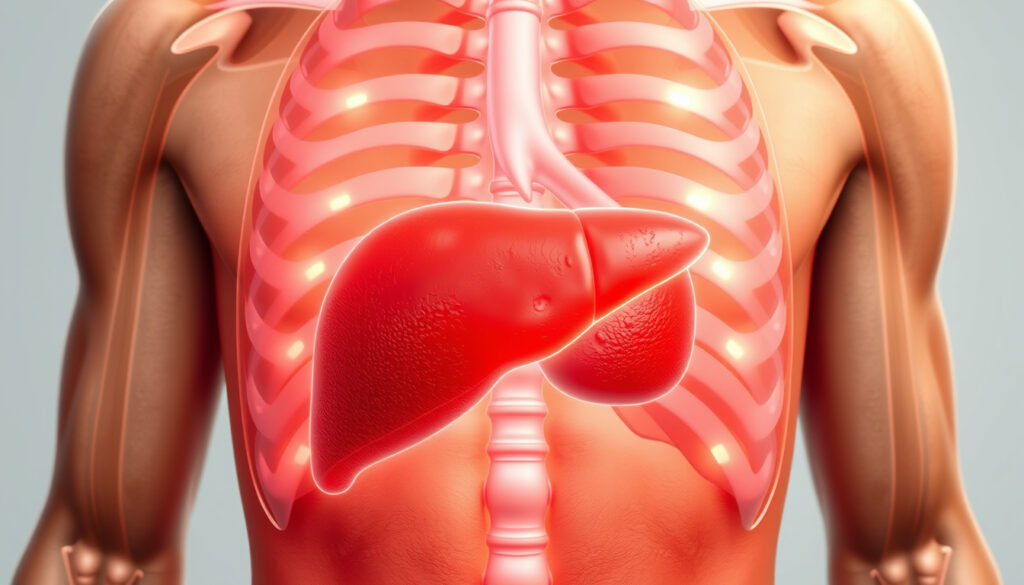
Where Is Your Liver? Location, Pain & Anatomy Guide
If you put your hand on the upper right side of your belly, right under your ribs, you’re probably touching somewhere near your liver — but most people couldn’t tell you exactly where it sits or how to tell if something’s off. That gap in body awareness matters more than you’d think, since the liver performs over 500 vital functions and pain from liver conditions often gets mistaken for muscle strain or indigestion. This guide walks you through exactly where your liver lives, what liver pain actually feels like, the early warning signs you shouldn’t ignore, and how clinicians check for trouble.
Location: Right side of upper abdomen · Position: Beneath diaphragm, above stomach and right kidney · Size: Football-sized, about 3 pounds · Key Role: Filters blood, makes chemicals
Quick snapshot
- Liver sits in upper right abdomen under rib cage (Medical News Today)
- Pain can radiate to right shoulder blade and back (Doctronic)
- True liver pain originates from the liver capsule, not liver tissue (Doctronic)
- Exact sensation varies by condition and individual
- Self-check accuracy depends heavily on body type and experience
- Left-sided pain rarely from liver, but cases can confuse diagnosis
- Persistent symptoms require hepatitis screening or ultrasound
- Lifestyle changes can reverse early-stage fatty liver
- Advanced cirrhosis may need transplant evaluation
| Attribute | Detail |
|---|---|
| Location | Upper right abdomen under right rib cage |
| Size and Weight | 15–20 cm wide, 8 cm high; approximately 3 pounds |
| Position Relative to Organs | Above stomach, right kidney, intestines |
| Primary Functions | Blood filtration, bile production, toxin processing, protein synthesis |
| Pain Origin | Liver capsule (organ tissue has few nerve endings) |
| Common Pain Radiation | Right shoulder blade, upper back, lower right ribs |
What Side Is Your Liver On?
Your liver sits on the right side of your body, tucked under your lower ribs in the upper right quadrant of your abdomen. Most of its mass lives under the right rib cage, though the organ is large enough that a portion extends across the midline toward the left side. According to Medical News Today, this positioning means the liver sits directly beneath the diaphragm, on top of your stomach, intestines, and right kidney.
The liver measures roughly 15–20 centimeters wide and about 8 centimeters high, making it the largest internal organ. It weighs approximately three pounds. That’s about the size of a football, which explains why people sometimes describe it as a “football-sized” organ — though it’s obviously not shaped like one.
Female vs Male
- Liver anatomy is virtually identical between sexes in terms of location and basic structure
- Body composition differences (more fat tissue in females) may affect how easily the liver edge is felt during palpation
- Hormonal cycles do not significantly shift liver position
The pattern shows that anatomical sex does not alter liver position, though body composition can influence clinical examination findings.
Front or Back View
From the front, the liver dominates the upper right abdomen. From the back, it presses against the diaphragm and the right kidney. If you’re trying to locate it from behind, you’d feel for tenderness or fullness just below your right shoulder blade, toward the lower ribs.
What this means is that back-view discomfort near the right lower ribs warrants liver evaluation alongside shoulder pain referral patterns.
From the Back
Back-view liver pain typically centers near the right side of your lower ribs, sometimes radiating upward toward the shoulder. According to ER of Dallas TX, pain may radiate from the liver to the back and right shoulder due to the organ’s size and proximity to the phrenic nerve.
The implication is that back pain on the right side combined with shoulder discomfort should prompt liver assessment rather than musculoskeletal treatment.
The liver’s right-side dominance is a consistent feature across all healthy adults. If you’re experiencing left-sided abdominal pain, your liver is almost certainly not the culprit — the spleen, stomach, or left kidney are more likely suspects.
Where Would You Feel Liver Pain?
Liver pain typically manifests as discomfort in the upper right abdomen, directly below the rib cage. This pain can feel dull and persistent, or it can throb. In some cases, the sensation intensifies with deep breathing, coughing, or lying on your right side. According to Doctronic, the liver itself contains very few nerve endings — true liver pain actually originates from the liver’s outer covering, called the capsule, when it becomes inflamed or stretched.
Upper Right Abdomen
This is the primary zone. Pain or soreness under your right ribs is the classic liver pain location. British Liver Trust specifically identifies pain or a sore feeling under the ribs on the right side as a potential indicator of liver issues. The pain may feel deep, below the right breast horizontally, and it can extend into the central upper abdomen if the liver is enlarged.
The implication is that central abdominal discomfort accompanying right rib pain suggests liver enlargement and warrants medical evaluation.
Referred Pain Areas
Liver pain frequently refers to other areas. The most common referral points are the right shoulder blade and the upper back. This happens because the phrenic nerve — which runs between the liver and the right shoulder — carries pain signals from both locations. According to Medical News Today, liver pain can also appear in the middle back near the lowest ribs.
What this means is that unexplained right shoulder or upper back pain, especially combined with abdominal symptoms, should raise suspicion for liver involvement.
Gallbladder pain can mimic liver pain, but there is a key difference. According to WebMD, gallbladder pain tends to be sharper and more persistent, while liver pain usually feels duller and more constant. If the pain comes in waves and feels knife-like, the gallbladder is the more likely culprit.
What Are the First Signs of a Bad Liver?
Early liver problems often announce themselves subtly — and that’s precisely why they’re easy to miss. Most people expect obvious pain, but the first warnings tend to be vague: fatigue that doesn’t lift with rest, mild nausea after fatty meals, or a feeling of fullness under the right ribs even without eating much.
Early Warnings
- Persistent fatigue not explained by sleep or stress
- Unexplained nausea or reduced appetite
- Feeling of fullness or tenderness under right ribs
- Mild itching without a skin rash
- Dark urine or pale stools
What this means is that these vague symptoms often get dismissed, but their persistence should trigger liver function testing.
Common Symptoms of Advanced Issues
- Jaundice (yellowing of skin and eyes)
- Abdominal swelling from fluid retention
- Easy bruising or bleeding
- Confusion from liver toxin buildup
- Spider angiomas (small blood vessel clusters on skin)
According to Ubie Health, red flags that demand immediate medical attention include jaundice, dark urine, pale stools, fever, and persistent pain. Common right side aches can stem from fatty liver, hepatitis, or alcohol-related inflammation.
Liver disease often progresses silently for years. By the time you notice persistent symptoms, significant damage may already be underway. Screening is the only reliable way to catch early-stage problems — don’t wait for pain to send you to the doctor.
Where Do You Press to Check Your Liver?
A basic liver self-check involves palpation — pressing gently to feel for the liver’s edge below your ribs. Clinical hepatologists use a standardized technique: place your hand flat on the right side of your abdomen, just below the rib margin, and press gently while taking a deep breath. According to Stanford Medicine 25, the proper technique is to position your hand lateral to the rectus abdominis muscle, below the area of liver dullness, then have the patient take a deep breath to feel the liver’s edge as it descends.
Self-Exam Steps
- Lie flat on your back with knees slightly elevated
- Place your right hand flat on your upper right abdomen, just below the rib cage
- Press gently inward and upward, about 2–3 centimeters deep
- Take a deep breath in through your nose — you should feel a firm edge pressing against your fingers if the liver is enlarged
- Note any tenderness, hardness, or masses
When to See a Professional
Self-palpation has limits. A normal liver may not be palpable at all in a healthy adult, especially if you carry abdominal fat. A doctor or hepatologist uses additional techniques — percussion to assess liver size, percussion to differentiate from bowel gas, and imaging (ultrasound or CT) for a definitive view. According to Stanford Medicine’s clinical guidelines, palpation starts in the right-lower quadrant if the liver is enlarged, moving progressively to locate the edge.
“The liver itself contains very few nerve endings, so true liver pain actually comes from the liver’s outer covering, called the liver capsule.”
— Doctronic, Medical Blog
What Drink Cleans Out the Liver?
No single drink “cleans” the liver — the organ cleans itself continuously through filtration. But certain beverages can support liver function and help reduce the burden on this hard-working organ.
Best Options for Liver Support
- Water: Staying hydrated helps the liver flush toxins more efficiently
- Coffee: Studies show coffee consumption is associated with reduced liver fibrosis and lower enzyme levels in people with fatty liver disease
- Green tea: Contains catechins that may help reduce liver fat accumulation
- Beetroot juice: Nitrates in beetroot support healthy blood flow, which aids liver function
- Lemon water: Vitamin C supports glutathione production, a key antioxidant the liver uses for detoxification
What Actually Harms the Liver
Rather than focusing on “cleansing,” the smarter approach is to avoid liver toxins. According to Times of India, the three worst things for your liver are excessive alcohol consumption, unregulated use of medications (especially acetaminophen), and a diet high in processed foods and sugar. Fatty liver disease — now affecting roughly one in four adults globally — is driven largely by diet and sedentary lifestyle rather than alcohol alone.
Drinks marketed as “liver detox” or “liver cleanse” are not regulated and have no proven medical benefit. The liver does not need external products to clean itself. If you have liver disease, these products may interact with medications. Talk to your doctor before using any herbal or supplement-based cleanse products.
Can Liver Damage Be Reversed?
The liver is one of the few organs in the body with genuine regenerative capacity. It can heal itself to a remarkable degree — but only up to a point. Early-stage fatty liver disease is reversible through lifestyle changes: weight loss, dietary improvement, and exercise. According to WebMD, reducing liver fat by even 5–10% can measurably improve liver function test results.
Once fibrosis (scarring) sets in, the picture becomes more complicated. Early fibrosis may still improve if the underlying cause is addressed. Advanced cirrhosis — where healthy liver tissue has been replaced by scar tissue — is generally not reversible. At this stage, management focuses on slowing progression and preventing complications. Liver transplant evaluation becomes a consideration when cirrhosis progresses to liver failure.
The window for reversal narrows as damage advances. Fatty liver → steatohepatitis → early fibrosis → advanced fibrosis → cirrhosis. Each stage is harder to reverse than the last. Early detection through screening (especially if you have risk factors like obesity, diabetes, or heavy alcohol use) is the single most important action you can take.
“Right side, upper abdomen, under the ribs is where your liver hangs out, and that’s usually where liver pain pops up.”
— Times of India, Health News
Summary
Your liver sits in the upper right quadrant of your abdomen, protected by your lower ribs, performing over 500 functions that keep your body running. Most of its mass lives under the right rib cage, though it extends partially leftward. True liver pain comes from the capsule, not the tissue, and it radiates characteristically to the right shoulder and back. Early warning signs are often subtle — fatigue, nausea, mild tenderness — and the only reliable way to catch liver disease early is through medical screening. Lifestyle changes can reverse fatty liver disease, but once significant scarring occurs, the damage becomes permanent. For anyone with persistent discomfort under the right ribs, especially combined with fatigue or unexplained nausea, the practical next step is straightforward: see a doctor, request liver function tests and an ultrasound, and start addressing any modifiable risk factors before damage accumulates.
Related reading: Health and Wellbeing · Free Hearing Test
To pinpoint issues, note that liver discomfort often appears as a dull ache in where liver pain is located, typically under the right ribs.
Frequently asked questions
What does an inflamed liver feel like?
An inflamed liver typically causes a dull, aching discomfort in the upper right abdomen, directly below the rib cage. The pain may feel constant and can worsen when lying on the right side, breathing deeply, or coughing. According to Cary Gastro, inflammation of the liver membrane produces a dull ache that can radiate to surrounding areas. Some people also feel fullness or tightness rather than sharp pain.
What is an early warning of liver damage?
Early liver damage often shows no obvious symptoms, which is why it is called a “silent” disease. When symptoms do appear early, they include unexplained fatigue, reduced appetite, mild nausea, and tenderness under the right ribs. Laboratory tests showing elevated liver enzymes are often the first objective sign of liver injury, detected during routine blood work.
What are the three worst things for your liver?
The three biggest liver damaging factors are excessive alcohol consumption, unregulated use of pain medications (especially acetaminophen/paracetamol), and a diet high in processed foods and sugars that drives fatty liver disease. According to Times of India, these three factors account for the majority of preventable liver disease worldwide.
Which fruit is best for liver repair?
No single fruit repairs the liver on its own, but several support liver health. Blueberries, grapes, and grapefruit contain antioxidants (like anthocyanins and naringenin) that may help reduce liver inflammation and fat accumulation. Avocados are rich in healthy fats and compounds that support glutathione production, which the liver uses for detoxification. A whole-foods diet, not any single fruit, is what drives liver health improvement.
What is the quickest way to repair your liver?
The fastest clinically demonstrated approach to improving liver health is eliminating the damaging agent — stop drinking alcohol completely, reduce processed food and sugar intake, lose weight if overweight, and stay physically active. According to WebMD, losing 5–10% of body weight can reduce liver fat and improve liver enzyme levels within weeks. There is no pill or supplement that replaces these lifestyle measures.
Can liver damage be reversed?
Liver damage is reversible in its early stages. Fatty liver disease, alcohol-related hepatitis, and early fibrosis can improve or resolve when the underlying cause is removed and healthy habits are adopted. Advanced cirrhosis with significant scarring is generally permanent, though management can slow progression and prevent complications. Early detection through medical screening is critical — it is the only reliable way to catch liver disease while reversal is still possible.
More related posts
 Real Estate Agents Hamilton – Top Reviews Ratings Commissions
 NRL Points Table 2025: Current Standings and Predictions
 Consulate General of India Auckland Reviews – 2025 Services Guide
 Eric Dane Cause of Death: ALS Led to Respiratory Failure
 Cheap Flights to Brisbane from Auckland: Compare Airlines & Prices
 IND vs AUS T20 2025: Results, Head-to-Head & Updates
 A Knight of the Seven Kingdoms Episode 5 Guide
 You Are My Sunshine – History, Lyrics, Covers and Chords