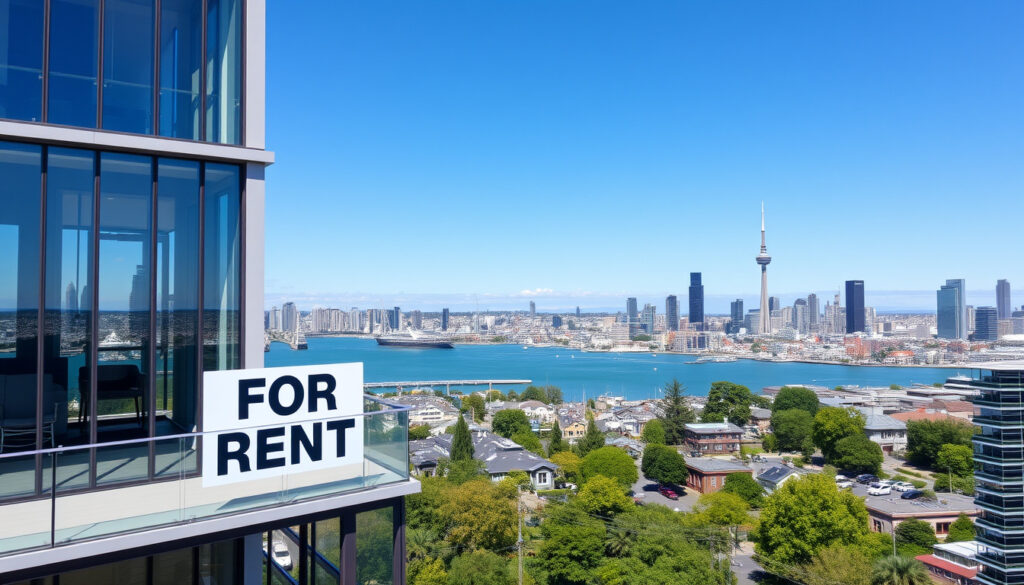
Apartments for Rent in Auckland: 2025 Rental Guide
Finding the right apartment in Auckland can feel like a full-time job. With rents quoted weekly and a market that moves fast, knowing where to start saves both time and stress.
Average weekly rent: $610 · Listings on Realestate.co.nz: 707 · Listings on Trade Me: 5,781 · Listings on Oneroof: 504
Quick snapshot
- Average weekly rent is $610 per Tenancy Services (New Zealand’s official rental authority)
- Trade Me lists 5,781 apartments for rent in Auckland (Trade Me (New Zealand’s largest online marketplace))
- Realestate.co.nz has 707 active apartment listings (Realestate.co.nz (national property listing site))
- Exact number of apartments available at any given moment can change daily (MoneyHub (independent financial guide))
- Average rent for specific suburbs without direct data from a single source (MoneyHub (independent financial guide))
- Which platform has the most up‑to‑date listings – counts overlap (MoneyHub (independent financial guide))
- Bond must be lodged with Tenancy Services within 23 working days of receiving it; tenants should contact the landlord if no confirmation within 6 weeks (Tenancy Services (official rental guidance))
- Typical rental search from viewing to lease signing takes 2–3 weeks (Tenancy Services (official rental guidance))
- Set a weekly budget first – Aucklanders typically spend 30%–50% of post‑tax income on rent (MoneyHub)
- Start searching on Trade Me and Realestate.co.nz; apply with ID, references, and proof of income (MoneyHub)
| Metric | Value |
|---|---|
| Average weekly rent | $610 |
| Total listings (Trade Me) | 5,781 |
| Total listings (Realestate.co.nz) | 707 |
| Total listings (Oneroof) | 504 |
| Most popular area | Auckland CBD |
| Cheapest average rent area | Outer suburbs (e.g., Manukau) |
What are the average rents for apartments in Auckland?
Current average weekly rent
- The median weekly rent in the Auckland region hit NZ$650 according to Stats NZ tenancy bond data for December 2025, as reported by Kiwifern (personal finance blog). That’s above the $610 average from Realestate.co.nz – the gap hints at higher rents in newer leases.
- Tenancy Services publishes market‑rent data for Avondale (Auckland) covering 1 Dec 2025 to 31 May 2026, showing a median weekly rent of $620 (Tenancy Services).
A single renter looking at a 1‑bedroom apartment in central or inner suburbs should budget NZ$3,500 to NZ$4,000 per month, according to Kiwifern estimates. Outer‑suburb options run NZ$3,200 to NZ$3,500 monthly.
Rent by apartment size
- One‑bedroom apartments average around $1,900 per month – roughly $440 per week. That aligns with the $190–$280 per week for a room in central/inner suburbs cited by NZ Pocket Guide (travel and relocation resource).
- Two‑bedroom units push above $2,500 per month. For a couple, Kiwifern estimates outer‑suburb two‑bedroom rent at NZ$4,800 to NZ$5,300 per month.
- Studio apartments and shared rooms offer an entry point: shared rooms can be found around NZ$150 per week (NZ Pocket Guide).
Rent by area
- Central Auckland (CBD) commands the highest prices – Expat.com (international relocation guide) calls it the most expensive area for renters.
- Eastern and southern suburbs are often cheaper than the CBD, per the same source.
- North Shore offers family‑friendly settings with moderate to high rents, while outer suburbs like Manukau show lower median rents.
The pattern: proximity to the city centre directly lifts weekly rent. A renter willing to commute can often halve their housing cost.
Where can I find cheap apartments for rent in Auckland?
Cheap apartments under $500 per week
- Yes, they exist – especially in outer suburbs and older buildings. Tenancy Services data for Avondale covering 1 Oct 2025 to 31 Mar 2026 shows a weekly rent of $503 (Tenancy Services). That’s below the city average.
- Trade Me currently lists hundreds of apartments under $500 per week; filtering by price on the platform is the quickest way to find them.
Budget-friendly areas
- Manukau, Papakura, and parts of South Auckland consistently show lower median rents.
- Central suburbs like Avondale, Mount Roskill, and Sandringham offer mid‑range prices with better access to the CBD.
Tips for finding deals
- Use multiple listing platforms – Trade Me, Realestate.co.nz, Oneroof, and Rentola (781 units per Rentola (rental listing aggregator)).
- Set alerts: new listings go fast. Apply within 24 hours of posting.
- Consider a flatmate: a room in a shared apartment can run $190–$280 per week (NZ Pocket Guide).
What this means: cheap rentals are available if you expand your search radius and act quickly. The trade‑off is commute time.
How many apartments are available for rent in Auckland?
Total listings on major platforms
| Platform | Listings |
|---|---|
| Trade Me | 5,781 |
| Realestate.co.nz | 707 |
| Oneroof | 504 |
| Rentola | 781 |
Four platforms, one pattern: Trade Me dominates the Auckland rental market with over 5,700 listings – nearly eight times the next largest. But Realestate.co.nz, Oneroof, and Rentola still add hundreds of unique units.
Breakdown by bedroom count
- One‑bedroom and studio apartments make up the largest share on all platforms, especially in the CBD.
- Two‑bedroom units are more common on the North Shore and in family suburbs.
- Three‑bedroom listings are rarer and often overlap with townhouses.
The catch: supply varies by season. February (university start) and January (summer) see the most turnover. Winter months typically have fewer listings.
What are the best areas to rent an apartment in Auckland?
Auckland CBD
- Proximity to work, university, nightlife, and public transport. Units are smaller but the convenience is unmatched.
- Prices are premium – typically the most expensive area (Expat.com). A 1‑bedroom in the city centre can cost $400–$550 per week.
North Shore
- Family‑oriented with good schools, beaches, and parks. Quieter than the CBD.
- Rents are moderate to high, but you get more space. A two‑bedroom apartment averages $500–$650 per week.
Other popular suburbs
- Ponsonby, Grey Lynn, Kingsland: trendy inner suburbs with high walkability and higher rents.
- Mount Eden, Epsom: established residential areas with good amenities, mid‑high prices.
- Manukau, Papatoetoe: more affordable with growing amenities, lower rents.
Why this matters: the best area depends on your commute tolerance and budget. A renter who prioritises short commutes pays a premium; someone who wants space and lower rent should look further out.
How to rent an apartment in Auckland: A step-by-step guide
Searching for listings
- Start on Trade Me (New Zealand’s largest online marketplace) – it has the most inventory.
- Cross‑check on Realestate.co.nz (national property listing site) and Oneroof (real estate data platform) for listings that may not appear elsewhere.
- Use filters: price range, bedrooms, suburb, property type (apartment/unit).
- Set email alerts for new listings matching your criteria.
Applying for a rental
- Prepare documentation in advance: photo ID, proof of income (payslips or bank statements), references from previous landlords or a character referee.
- Attend open homes (usually Saturdays or mid‑week evenings). Arrive on time, dress neatly, and bring your documents.
- Submit an application through the platform or directly with the property manager. Many use the standard Tenancy Services application form.
Understanding the lease and bond
- The maximum general bond a landlord can charge is up to 4 weeks’ rent (Tenancy Services (official rental authority)).
- If you have a pet, a pet bond of up to 2 weeks’ rent may be added, per the same source.
- After you pay the bond, the landlord must lodge it with Tenancy Services within 23 working days. If you don’t receive a confirmation within 6 weeks, contact your landlord.
- Read the tenancy agreement carefully – check the weekly rent, duration, notice period, and any special conditions.
New Zealand rents are quoted and paid weekly, not monthly. A $500 weekly rent is $2,166 per month – a difference that catches many newcomers off guard. Always do the weekly‑to‑monthly conversion before signing.
For more on New Zealand’s property processes, see Deadline Sale Meaning NZ and check Grand Millennium Auckland Reviews for accommodation alternatives.
What we know for sure – and what’s still fuzzy
Confirmed facts
- Average weekly rent $610 (Realestate.co.nz)
- Trade Me lists 5,781 apartments
- Realestate.co.nz lists 707 apartments
- Oneroof lists 504 apartments
- Rentola lists 781 units
- Maximum bond is 4 weeks’ rent (Tenancy Services)
- Pet bond up to 2 weeks’ rent (Tenancy Services)
- Median weekly rent in Auckland region NZ$650 per Stats NZ (via Kiwifern)
What’s unclear
- Exact number of available apartments at any given moment – counts change daily
- Average rent for specific suburbs without direct data from a single source
- Which platform has the most up‑to‑date listings – overlap is significant
“Aucklanders generally spend 30% to 50% of post‑tax income on rent.”
“Central Auckland is typically the most expensive area for renters.”
“If you do not receive bond‑lodgement confirmation within 6 weeks, contact your landlord.”
The rental market in Auckland demands speed, prep, and a clear budget. For a newcomer, the choice is clear: start on Trade Me with your weekly budget locked, documents ready, and a willingness to look beyond the CBD – or risk paying more for a worse location.
tenancy.govt.nz, bambooroutes.com, myrent.co.nz, expatinfodesk.com
For a comprehensive overview of available units, the Auckland apartment rental guide provides detailed pricing and suburb insights.
Frequently asked questions
What is the typical size of a one-bedroom apartment in Auckland?
One-bedroom apartments in Auckland typically range from 35 to 60 m². Newer CBD apartments are often smaller (35–45 m²), while older units in the suburbs may be larger.
Do I need to pay a bond when renting in Auckland?
Yes. Landlords can charge a bond of up to 4 weeks’ rent. The bond must be lodged with Tenancy Services within 23 working days. A pet bond of up to 2 weeks’ rent may also apply.
How long is a standard rental lease in New Zealand?
The most common lease is a fixed-term tenancy of 12 months. Periodic (month-to-month) tenancies are also available but less common for apartments.
Are pets allowed in Auckland apartments?
It depends on the landlord. Many apartment buildings have a no-pet policy, but some allow pets with an additional bond of up to 2 weeks’ rent. Always check the tenancy agreement.
What utilities are usually included in rent?
In most Auckland apartments, water is included. Electricity, gas, and internet are typically paid separately by the tenant. Always clarify before signing.
How do I apply for a rental apartment in Auckland?
Submit an application through the listing platform, providing photo ID, proof of income, and references. Attend the open home, then wait for the landlord or agent to approve.
What documents do I need to rent an apartment?
You’ll need a valid photo ID (passport or driver licence), recent payslips or bank statements, and references from previous landlords or a character referee.
Can I negotiate the rent in Auckland?
Yes, especially if the apartment has been listed for a few weeks. Offer a few dollars less per week or ask for a rent-free period. Negotiation is more common in slower months (winter).
More related posts
 Symbio Wholesale NZ Limited – Company Profile & Services
 Spark Store Near Me – NZ Locations, Hours & Services
 Auckland FC vs Melbourne Victory FC Stats: Head-to-Head Record
 Synlait Milk Share Price: Analysis and Forecast
 Baby on the Move Napier: Services, Location & Discounts
 Cast of The Brokenwood Mysteries: Main Actors & Characters
 The Wind in the Willows: Book Summary, Characters, Themes & Quotes
 Shokz OpenRun Pro 2 Review: Worth It