Kathmandu Closing 21 Stores: Reasons, Impact and What’s Next
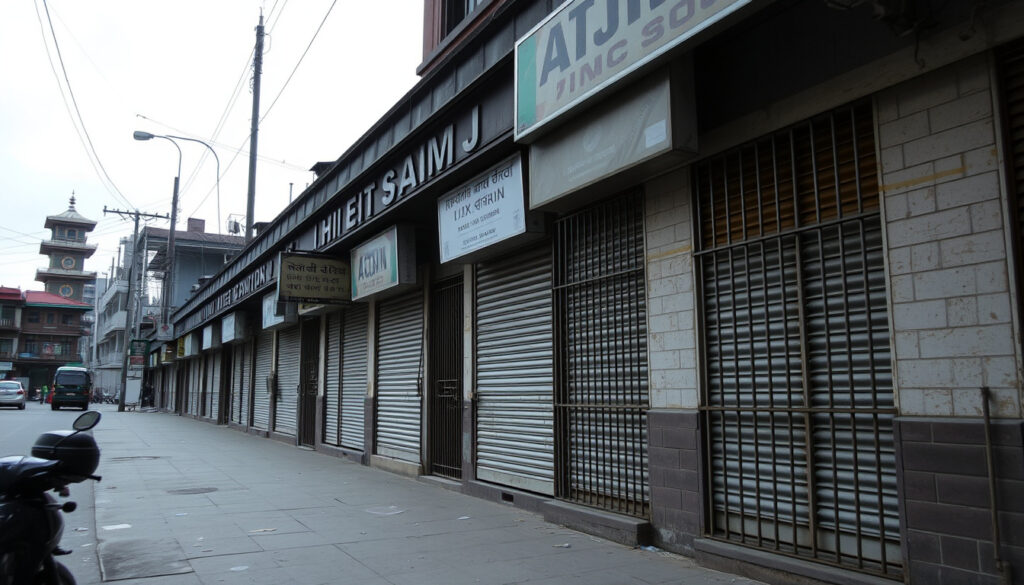
If you’ve walked past a Kathmandu store lately and wondered why the aisles feel a little quieter, you’re onto something. KMD Brands – the New Zealand company behind Kathmandu, Rip Curl, and Oboz – has confirmed it will close 21 underperforming stores globally as part of a cost-reset and transformation plan (Newstalk ZB).
Stores closing: 21 ·
Total global stores: more than 300 ·
Parent company: KMD Brands Limited ·
New concept stores: 6 ·
Portfolio brands: Kathmandu, Rip Curl, Oboz ·
Stock price trend: declining
Quick snapshot
- 21 stores to close across KMD Brands network (Newstalk ZB)
- Parent company is KMD Brands Limited, based in New Zealand (Inside Retail NZ)
- 6 new concept stores planned as replacements (Inside Retail NZ)
- Exact list of store locations affected
- Timeline for each individual closure
- Employee impact and severance details
- September 2025: announcement of 21 closures and 6 concept stores (Inside Retail NZ)
- Late 2025 – early 2026: gradual closures and concept store openings (Inside Retail NZ)
- 6 Kathmandu “concept stores of the future” in Australia and New Zealand (Inside Retail NZ)
- Greater investment in e-commerce (Inside Retail NZ)
- Product innovation centres at Rip Curl headquarters (Inside Retail NZ)
Six key figures from the plan, one pattern: the company is shrinking its physical footprint while betting on a new flagship retail experience.
| Label | Value |
|---|---|
| Closure count | 21 stores |
| Global store count | Over 300 |
| Parent company | KMD Brands Limited |
| New concept stores | 6 |
| Brands affected | Kathmandu, Rip Curl, Oboz |
| Stock exchange | NZX: KMD |
Why is Kathmandu shutting down?
Financial performance and turnaround strategy
KMD Brands announced the closure of 21 stores as part of a “transformation strategy” aimed at driving growth and profitability (Inside Retail NZ). The company’s chairman, David Kirk, described the retail environment as “tough” and noted that discretionary retail – items like insulation jackets, raincoats, and wetsuits – is being hit especially hard (Newstalk ZB). The plan includes a minimum A$25 million cost reset, with the store closures expected to deliver significant savings.
Impact of falling share price
KMD Brands’ stock has been on a downward trend for months, putting pressure on management to take decisive action. The company trades on the New Zealand Stock Exchange under the ticker KMD. The announcement of store closures is widely seen as an attempt to reverse that slide by cutting operating costs and focusing on higher-margin channels.
Parent company KMD Brands’ restructuring
New CEO Brent Scrimshaw, appointed in March 2025, described the plan as “the beginning of a multi-year transformation” (Inside Retail NZ). Alongside closures, the company is opening 3 new Kathmandu concept stores in Australia and New Zealand this year, plus 3 more later. The idea: fewer, better-performing stores that offer a premium brand experience rather than just a transactional space.
Shuttering 21 stores cuts costs but risks losing shelf-space visibility in key suburban malls. For a brand that relies on impulse purchases and gear try-ons, the online channel alone may not fill the gap.
What country owns Kathmandu clothing?
Parent company KMD Brands’ origin and listing
Kathmandu is owned by KMD Brands Limited, a New Zealand-based publicly traded company listed on the NZX (Inside Retail NZ). The group was formerly known as Kathmandu Holdings and rebranded to KMD Brands in 2020 to reflect its multi-brand strategy.
Global presence and brand portfolio
KMD Brands operates more than 300 stores globally across three core brands: Kathmandu (outdoor gear), Rip Curl (surf and wetsuits, founded in Australia), and Oboz (hiking footwear, based in the US) (Inside Retail NZ). Most Kathmandu locations are concentrated in Australia and New Zealand, with additional stores in the UK, Ireland, and Singapore.
The implication: Kathmandu’s home market is New Zealand, but its revenue base is increasingly global. The store closures will affect all three brands, not just Kathmandu.
How many Kathmandu stores are there in the world?
Current store count and global footprint
While KMD Brands does not break out Kathmandu-specific figures in a single line, analysts estimate the brand runs roughly 150+ standalone stores, with the remainder comprising Rip Curl and Oboz locations. The total network exceeds 300 stores (Inside Retail NZ).
Breakdown by region
- Australia: largest market, approximately 80+ Kathmandu stores
- New Zealand: roughly 50–60 stores
- Rest of the world: UK, Ireland, Singapore – fewer than 20 combined
Why this matters: the closures are likely concentrated in underperforming sites in Australia and New Zealand, where the vast majority of physical stores sit.
KMD Brands is cutting roughly 7% of its total store footprint. For a retailer that already has thin margins in discretionary categories, that’s a meaningful bet on consolidation.
Which Kathmandu stores are closing?
Affected regions: Australia, New Zealand, and beyond
KMD Brands has not yet published a full list of closing locations. However, chairman David Kirk confirmed that at least 21 stores will close across the network (Newstalk ZB). Most are expected to be in Australia and New Zealand, where the store count is highest. Some Rip Curl and Oboz stores are also reportedly on the list.
List of specific store names (not yet fully disclosed)
No official store-by-store list has been released. News reports suggest that underperforming sites in smaller malls and secondary locations are the likeliest targets. Independent coverage from Inside Retail NZ indicates that a portfolio network review is ongoing, and more closures could follow if the review identifies additional weak spots.
How to find closure info: official announcements and store signs
Consumers looking for specific closure details should check store front signage or the KMD Brands investor page. Local newspapers in Australia and New Zealand are also picking up individual store closure announcements. For broader retail context, readers can explore our guide to Bed Bath and Beyond Chartwell: Store Guide for 2024 for a parallel case of store rationalisation.
The pattern: when retailers close stores, the first wave usually hits underperforming leases. KMD Brands is following that playbook, but with an unusual twist – it’s simultaneously investing in new concept stores.
Who owns Kathmandu now?
KMD Brands limited and its ownership structure
KMD Brands Limited is the current owner, formed after the 2020 rebrand from Kathmandu Holdings. The company is publicly traded on the NZX under the ticker KMD (Inside Retail NZ). Major institutional investors include New Zealand-based fund managers, though exact holdings shift quarterly.
Historical acquisition by Briscoe Group?
In 2019, Briscoe Group – a New Zealand homeware and sporting goods retailer – tried to acquire Kathmandu but failed. Briscoe’s offer was rejected by the board, and Kathmandu later merged with Rip Curl and Oboz to form KMD Brands (Inside Retail NZ).
Current shareholders and market cap
KMD Brands has a market capitalisation of approximately NZ$300 million (as of early 2025). Shareholders include retail investors and institutional funds. The stock has declined over the past year, reflecting broader headwinds in discretionary retail.
The trade-off: being a public company means short-term pressure from investors to cut costs. The store closures may boost earnings in the near term, but the long-term bet is on the new concept stores and e-commerce expansion.
Timeline of key events
- September 2025: KMD Brands announces closure of 21 stores and opening of 6 new concept stores (Inside Retail NZ)
- Late 2025 – early 2026: Gradual store closures and transition to new concept stores (Newstalk ZB)
- Ongoing: Financial restructuring, cost cutting, and e-commerce investment
What’s confirmed and what’s still unclear
Confirmed facts
- 21 stores will close across KMD Brands (Newstalk ZB)
- 6 new concept stores will open (Inside Retail NZ)
- KMD Brands is the parent company (Inside Retail NZ)
- The closures are part of a turnaround to boost profits (Newstalk ZB)
What’s unclear
- Exact list of store locations affected
- Timeline for each closure
- Employee impact and severance details
- Impact on e-commerce operations
Key voices on the store closures
“The retail environment is tough. Discretionary retail is being hit hard – people are spending on food and essentials, not on insulation jackets and wetsuits.”
– David Kirk, Chairman of KMD Brands (Newstalk ZB)
“This marks the beginning of a multi-year transformation to drive growth, improve profitability, and deliver a better customer experience.”
– Brent Scrimshaw, CEO of KMD Brands (Inside Retail NZ)
What this means for shoppers
For New Zealand and Australian shoppers, the immediate takeaway is that you may see closing-down sales at some Kathmandu, Rip Curl, and Oboz stores over the coming months. Warranties and online returns will remain unaffected. Meanwhile, the new concept stores promise a more curated experience – think fewer racks and more gear demonstrations. For bargain hunters, the closure sales could be a good chance to grab gear at a discount. For the brand itself, the gamble is that fewer, better stores can compete with online giants like Rebel Sport. Readers looking for savings on outdoor gear can check our Rebel Sport Discount Code 2026: 30% Off + How to Apply guide.
Frequently asked questions
Are all Kathmandu stores closing?
No. Only 21 of the more than 300 KMD Brands stores are slated for closure. Most Kathmandu locations will remain open.
Why is KMD Brands closing stores?
The closures are part of a cost-reset and transformation plan aimed at boosting profitability. Chairman David Kirk cited a tough retail environment and weak discretionary spending (Newstalk ZB).
Will there be a closing sale?
Yes, many closing stores are expected to run clearance sales. Check local store signs or the KMD Brands website for details.
Is Kathmandu going out of business?
No. The brand is reducing its store count but simultaneously investing in new concept stores and e-commerce. The company is not liquidating.
What will happen to the closed stores?
Leases will be terminated or reassigned. Some locations may be taken over by other retailers, while others will be converted to the new concept format.
How does this affect Rip Curl and Oboz stores?
Some Rip Curl and Oboz locations are also among the 21 closures. The transformation plan covers all three brands under KMD Brands.
More related posts
 Ford Raptor Price NZ: 2026 New & Used Costs
 Air NZ Cheap Flights: Deals, Tips & Booking Hacks
 What Is an Adjective? Definition, Examples & How to Find Them
 Whanganui to New Plymouth: Stops, Bus & Travel Tips
 Colleen Hoover Net Worth 2025: BookTok Author’s Fortune
 Car Rental at Melbourne Airport: Compare On-Site Options & Find Cheap Deals
 Blind Low Vision NZ – Library, Guide Dogs, Locations
 For I Know the Plans I Have for You – Biblical Context Explained