Ford Raptor Price NZ: 2026 New & Used Costs
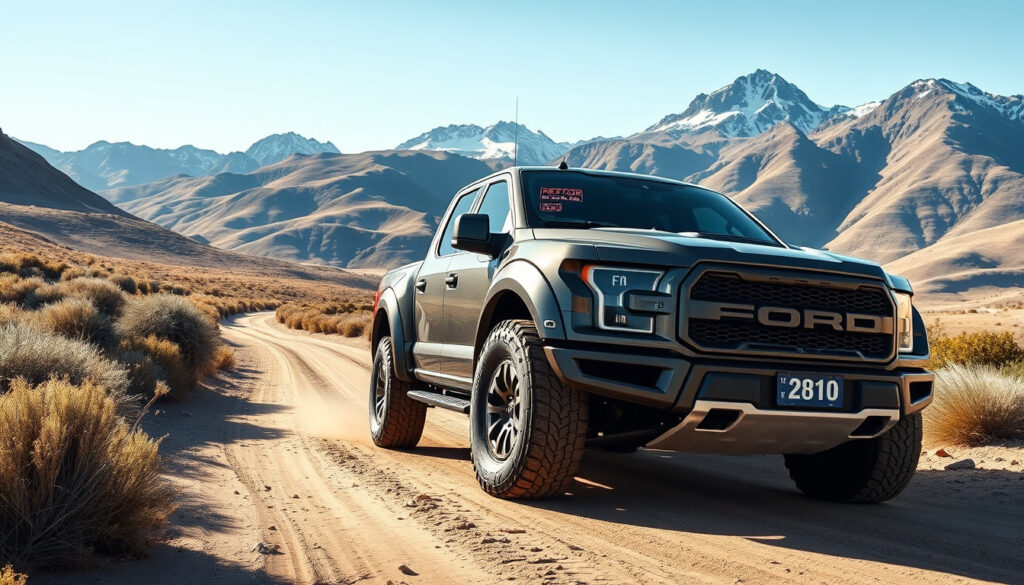
There’s a moment when you see a Ford Ranger Raptor parked next to a regular ute and realise it sits on an entirely different plane. That widened stance, the chunky all-terrain tyres, the purposeful grille — it shouts something the standard Ranger doesn’t. But what it also brings is a price tag that raises eyebrows. This guide breaks down exactly what the 2026 Ford Raptor costs in New Zealand, why it commands that premium, and how it stacks up against the alternatives you’re probably also considering.
Starting price (new, NZ): approx. $84,990 (2018 model) to $98,490 (current gen) ·
Engine: 3.0L V6 twin-turbo petrol; 292 kW / 583 Nm ·
Transmission: 10-speed automatic ·
Drive: 4WD with selectable modes ·
Towing capacity (braked): 2,500 kg ·
Warranty: 5 years / unlimited km
Quick snapshot
- RRP estimate $98,490 (Ford New Zealand official pricing)
- On-road costs extra (approx. $3,000–$5,000) (Ford New Zealand official pricing)
- Available at Ford dealers and Trade Me Motors listings
- 3.0L V6 twin-turbo (Ford New Zealand specs)
- 292 kW / 583 Nm (Ford New Zealand specs)
- 10-speed auto, 4WD (Ford New Zealand specs)
- Toyota Hilux GR Sport – $72,990 (Ford New Zealand pricing)
- Ford Wildtrak – $85,990 (Ford New Zealand pricing)
- Standard Ranger – $54,990 (Ford New Zealand pricing)
- 2023 models approx. $85,000–$95,000 (Trade Me Motors used listings)
- 2021 models approx. $70,000–$80,000 (Trade Me Motors used listings)
- Depreciation about 10-15% per year (Trade Me Motors used listings)
Ford New Zealand — Ford charges more for the Raptor than the Platinum luxury variant ($98,490 vs $92,990), which means you’re paying for off-road engineering, not leather trim. Buyers are essentially trading comfort kit for FOX shocks and a wider track.
How much is the Ford Ranger Raptor 2026 in NZ?
New Ford Ranger Raptor 2026 pricing overview
- Official RRP (2026.50MY): $98,490 — this is the price Ford New Zealand lists on its official 2026 Ranger pricing page, unchanged from the 2025 model year according to Driven Car Guide’s analysis.
- Dealer discounts available: Some dealers are already undercutting RRP. Pacific Motor Group lists a new 2026 Raptor at $89,990 plus ORC, reduced from $96,490. Eagers Automotive shows one at $91,990 plus ORC.
- Trade Me Motors listings: A brand-new 2026 example was listed at $96,490 plus on-road costs, while another dropped to $91,990 (via Trade Me Motors).
- Year-over-year price change: The RRP moved from $96,490 (2025) to $98,490 (2026) — a $2,000 increase, confirmed by Driven Car Guide’s comparison table.
Factors that affect the final drive-away price
- On-road costs: Registration, COF, and dealer delivery add roughly $3,000–$5,000 on top of the listed price.
- Dealer location: Auckland and Christchurch dealers tend to have more stock pressure, occasionally leading to negotiation room.
- Model year: 2025 model year Raptors still available from dealers may be discounted by $4,000–$6,000 to clear stock.
The implication: price-conscious buyers who act strategically can still secure a Raptor below list price.
Why is a Ford Raptor so expensive?
Performance hardware: V6 twin-turbo, FOX shocks, heavy-duty chassis
- Engine: The 3.0L V6 twin-turbo petrol produces 292 kW and 583 Nm — roughly double the power of the standard Ranger’s 2.0L bi-turbo diesel (157 kW). Ford New Zealand confirms this engine is exclusive to the Raptor within the Ranger lineup.
- Suspension: Exclusive FOX 2.5-inch internal bypass dampers with remote reservoirs. These are race-derived components, not shared with any other Ranger variant.
- Chassis: The Raptor rides on a reinforced frame with a wider track (2,028 mm vs 1,855 mm for a standard Ranger). The wheel track is 50 mm wider front and rear, requiring unique control arms and knuckles.
Low production volume versus standard Ranger
- The Raptor is a niche model within the Ranger range. Ford produces significantly fewer Raptors than standard Rangers, which spreads development costs over a smaller number of units.
- This limited supply creates what economists call a “scarcity premium” — buyers pay more because the vehicle is harder to find.
Brand premium: Ford Performance halo effect
- The Raptor badge comes from Ford’s high-performance division, the same team behind the Ford GT and Shelby Mustangs. That heritage carries a price premium.
- Comparing within the Ford lineup: the Ford New Zealand pricing page lists the Raptor at $98,490, the Platinum at $92,990, Wildtrak at $85,990, and base Ranger at $54,990. The step up from base Ranger to Raptor is $43,500 — roughly 80% more.
The pattern: Ford positions the Raptor as a halo vehicle, not a volume seller, and prices it accordingly.
Which is better, Ford Raptor or Ford Ranger?
Raptor vs Ranger: engine, off-road capability, towing
The key difference between these two Rangers is how they trade towing capacity for off-road aggression.
| Attribute | Ford Ranger Raptor | Ford Ranger (standard) |
|---|---|---|
| Engine | 3.0L V6 twin-turbo petrol | 2.0L bi-turbo diesel (157 kW) |
| Power | 292 kW (Ford NZ) | 157 kW (standard) |
| Torque | 583 Nm | 500 Nm |
| 0-100 km/h | 6.0 seconds (approx.) | ~9.0 seconds |
| Towing (braked) | 2,500 kg | 3,500 kg |
| Ground clearance | 280 mm | 228 mm |
| Track width | 2,028 mm | 1,855 mm |
| Suspension | FOX 2.5-inch dampers | Standard coil-spring |
| Starting price (2026) | $98,490 | $54,990 |
Cost-benefit for daily driving vs off-road use
- Daily driving: The standard Ranger is more comfortable on sealed roads thanks to its diesel engine’s lower fuel costs and softer suspension. The Raptor’s FOX shocks are stiff on pavement — you feel every tar snake.
- Off-road: The Raptor is in a different league. Its 280 mm ground clearance, wider track, and race-bred suspension allow it to tackle terrain that would stop a standard Ranger cold.
- Running costs: The Raptor’s 3.0L V6 petrol drinks more than the standard 2.0L diesel. Claimed combined fuel economy is 12.4 L/100 km for the Raptor vs ~8.5 L/100 km for the diesel Ranger.
Trade Me Motors — Standard Ranger owners get 3,500 kg towing capacity and lower running costs. Raptor owners give up 1,000 kg of towing capacity for 52 mm more ground clearance and 36% more width. If you tow a boat, choose the standard Ranger. If you tackle riverbeds and rocky tracks, choose the Raptor.
The catch: the Raptor’s off-road prowess comes at the cost of everyday practicality.
Is Ford Raptor bigger than Toyota Hilux?
Six comparisons, one pattern: the Raptor is significantly wider and taller, but not much longer.
| Dimension | Ford Ranger Raptor | Toyota Hilux (standard) |
|---|---|---|
| Length | 5,360 mm | 5,325 mm |
| Width | 2,028 mm | 1,855 mm |
| Height | 1,872 mm | 1,855 mm |
| Wheelbase | 3,270 mm | 3,085 mm |
| Ground clearance | 280 mm | 228 mm |
| Track width | 2,028 mm | 1,540 mm (approx.) |
- Width is the killer metric: The Raptor is 173 mm wider than a Hilux. That means it won’t fit in some standard NZ carparks and is tight on narrow farm tracks.
- Ground clearance advantage: 52 mm extra clearance means the Raptor can clear rocks and ruts that would scrape a Hilux’s underbody.
- Toyota Hilux GR Sport (performance variant): Priced at $72,990 (per Toyota New Zealand), the GR Sport is $25,500 cheaper than the Raptor but has a 2.8L diesel with 165 kW — well short of the Raptor’s 292 kW.
The implication: your choice depends on whether you prioritize urban maneuverability or off-road stability.
Which is better, Ford Wildtrak or Ford Raptor?
Wildtrak vs Raptor: price difference
The Wildtrak is the premium on-road Ranger, while the Raptor is the off-road specialist. Ford New Zealand’s pricing places the Wildtrak Double Cab Pick Up V6 at $85,990 and the Raptor at $98,490 — a $12,500 gap.
On-road comfort versus off-road aggression
The Wildtrak and Raptor look similar but diverge completely in their engineering priorities.
| Attribute | Ford Wildtrak V6 | Ford Ranger Raptor |
|---|---|---|
| Price (2026 NZ RRP) | $85,990 (Ford NZ) | $98,490 |
| Engine | 3.0L V6 turbo diesel (184 kW) | 3.0L V6 twin-turbo petrol (292 kW) |
| Suspension | Standard coil-spring | FOX 2.5-inch dampers |
| Ground clearance | 228 mm | 280 mm |
| Towing capacity | 3,500 kg | 2,500 kg |
| Fuel type | Diesel | Petrol |
| Skid plates | None | Front, engine, transfer case |
- Wildtrak wins on-road: Its diesel engine offers better fuel economy (~8.5 L/100 km vs 12.4 L/100 km), and the standard suspension is more compliant on sealed roads.
- Raptor wins off-road: The FOX dampers, 52 mm extra ground clearance, and skid plates mean the Raptor can handle far rougher terrain.
- Towing trade-off: The Wildtrak can tow 3,500 kg (enough for a large boat or horse float), while the Raptor is limited to 2,500 kg.
Ford New Zealand — The Wildtrak looks similar to the Raptor from 10 metres away — same cab shape, similar stance. But underneath, they are fundamentally different vehicles. Buyers paying $12,500 more for the Raptor are buying a dedicated off-road machine that compromises daily comfort and towing capacity. If you tow heavy loads or do most of your driving on sealed roads, the Wildtrak is the smarter buy.
The pattern: the Raptor premium buys off-road hardware, not on-road luxury.
What is the price of a used Ford Raptor in NZ?
Used Ford Raptor price trends (NZ market)
- 2023 models: Generally listed between $85,000 and $95,000 depending on condition and mileage. Trade Me Motors used listings show a wide spread.
- 2021 models: Asking prices range from $70,000 to $80,000. These are the earlier 2.0L bi-turbo diesel variants, not the V6.
- Depreciation rate: Based on asking prices, the Raptor loses roughly 10-15% per year in the first three years, which is slightly better than the standard Ranger (15-18%).
- Diesel vs petrol used market: The 2.0L diesel Raptors (2021-2023) hold value differently from the V6 petrols (2023+). The diesel models are more popular with buyers who care about fuel costs, while the V6 attracts enthusiasts.
What to watch for when buying a used Raptor in NZ
- Off-road damage: Check for underbody scrapes, damaged skid plates, and bent suspension components. The FOX shocks are expensive to replace.
- Service history: Ford’s 5-year/unlimited km warranty only applies if the vehicle has been serviced according to the schedule. Missing services can void coverage on major components.
- Import vs NZ-new: Some used Raptors in NZ are Japanese imports (grey-market). These may not have full NZ warranty coverage and may have different specification levels.
What this means: the used market offers a genuine entry point for buyers who want Raptor capability without the new-car premium.
Upsides
- Extraordinary off-road capability from FOX suspension and wide track
- Powerful 3.0L V6 twin-turbo with 292 kW
- Strong resale value compared to standard Rangers
- Ford’s 5-year unlimited km warranty
- Unique styling that stands out from every other ute
Downsides
- Premium price — $43,500 more than base Ranger
- High fuel consumption (12.4 L/100 km claimed)
- Limited towing capacity (2,500 kg vs 3,500 kg)
- Stiff ride on sealed roads
- Very wide body can be awkward in city parking
Related reading: McDonald’s Price List NZ 2025: Menu Items, Big Mac & Deals
trademe.co.nz, onlycars.co.nz, ccarprice.com, motoringnz.com, andrewsimms.co.nz, inghamdriven.nz
Frequently asked questions
Is the Ford Raptor reliable for daily driving?
The Raptor is mechanically robust, but its stiff suspension makes it less comfortable for daily commuting than a standard Ranger or Hilux. The V6 petrol engine is reliable, but fuel costs will be significantly higher than a diesel ute. Most owners report good reliability when serviced on schedule.
How much does it cost to insure a Ford Raptor in NZ?
Insurance costs vary by provider and driver profile, but expect to pay roughly $2,000–$3,500 per year for comprehensive cover. The Raptor’s high value and performance classification push premiums above standard ute levels. Get quotes from multiple insurers including AA Insurance, State, and Tower.
What is the fuel consumption of the Ford Raptor?
Ford claims a combined fuel consumption of 12.4 L/100 km for the V6 Raptor. Real-world driving — especially off-road or in urban stop-start traffic — typically returns 14-16 L/100 km. A standard diesel Ranger uses about 8.5 L/100 km. Annual fuel costs for the Raptor can be $1,500–$2,500 more depending on mileage.
Does the Ford Raptor have a diesel engine?
Earlier Raptor models (2021-2023) had a 2.0L bi-turbo diesel engine. Current 2026 model year Raptors in NZ use the 3.0L V6 twin-turbo petrol only. There is no diesel option for the current-generation Raptor in New Zealand.
How long does a Ford Raptor last?
With proper maintenance, Ford Raptors commonly exceed 200,000 km. The FOX suspension may require rebuilding at around 80,000-100,000 km, which is a $3,000-$5,000 job at a specialist. The engine and transmission are generally durable if oil changes are done on schedule.
What is the resale value of a Ford Raptor after 5 years?
Based on current NZ market data, a Ford Raptor retains approximately 50-60% of its original value after 5 years. This is better than the standard Ranger (40-50%) but worse than a Toyota Hilux (55-65%). The Raptor’s niche positioning helps resale, but high fuel costs can limit the buyer pool on the used market.
Is the Ford Raptor good for towing a boat?
The Raptor tows a maximum of 2,500 kg (braked). This is enough for a small to medium boat (e.g., a 5-metre runabout or a small trailer sailer), but insufficient for larger boats, horse floats, or heavy caravans. If towing is your priority, a standard Ranger (3,500 kg) or Wildtrak (3,500 kg) is more suitable.
Can you fit a bullbar on a Ford Raptor?
Yes, but it requires a bullbar specifically designed for the Raptor’s wider track and different front-end geometry. Standard Ranger bullbars do not fit. Brands like ARB and Ironman offer Raptor-specific options, though they cost more — typically $2,500-$4,000 fitted.
The Raptor is a specialised tool for a specific buyer. For Kiwis who regularly tackle rough terrain, the $98,490 price tag buys genuine race-bred off-road engineering that no other production ute can match. For everyone else — urban drivers, heavy towers, or budget-conscious buyers — the standard Ranger or Wildtrak offers better value per dollar. The choice isn’t about which is “better” in the abstract; it’s about whether the premium is worth it for the way you actually drive. For the off-road enthusiast, the answer is clear: the Raptor justifies its cost every time you leave the sealed road. For the daily commuter, the sensible money goes elsewhere.
More related posts
 How to Pray the Rosary: Step by Step Guide for Beginners
 Daily Post Deaths Today: North Wales Obituaries Guide
 How to Secure Home Wi-Fi: Complete Step-by-Step Guide
 TV Wall Bracket NZ: Best 55-75 Inch Mounts & Retailers
 All Blacks v Australia: Watch, Kick Off & Bledisloe Cup Result
 John F. Kennedy Jr.: Plane Crash Death, Wife, and Life Facts
 Life Cycle of a Star: Stages, Evolution & Final Fate
 China Eastern Airlines NZ: Reviews, Ratings, Contact & Booking